Hi thanks for visiting! In the past 12 months I’ve been a bit crap with getting around to finishing (or even starting) blog posts so here’s hoping you’re reading not long after our visit in August 2026!
This was our second time to Africa. The first trip to Egypt in 2022 resulted in me proposing to Mikayla in front of the pyramids! No such romantic gestures this time around let me be clear.
Morocco is similarly on the northern coast of the continent, and inland Marrakech is the most visited of the cities, noting Casablanca, Fez, Tangier, Agadir and the capital city Rabat are well-known others.
As a tourist, you’ll be glad to know that you’ll get by using English. Whilst Arabic is the most common language, many locals also speak French and if you visit outside the city to, say, the Atlas Mountains, expect to be welcomed by Berber communities with their own language.
It was regularly pushing 40 degrees Celsius when we visited in August so be prepared…
I refer to the word “Medina” a lot in the post. This term refers to the historical centre, filled with narrow streets and traditional buildings, enclosed by thick walls that were for protection against the attacks back in the day. Day trips aside, we spent 95% of our trip within these walls.
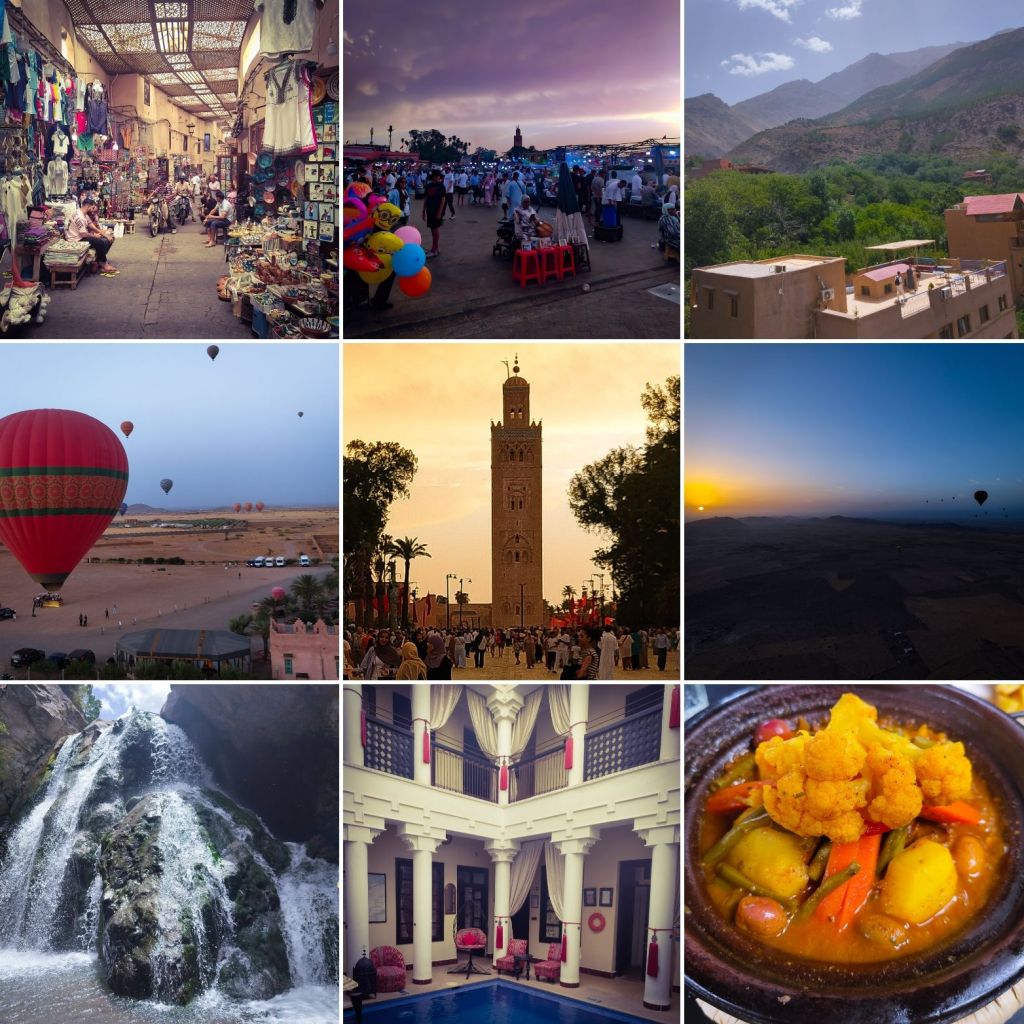
Flights and Accommodation
We booked through easyJet holidays. Flights from Bristol and four nights in traditional riad accommodation cost £600 for two adults.
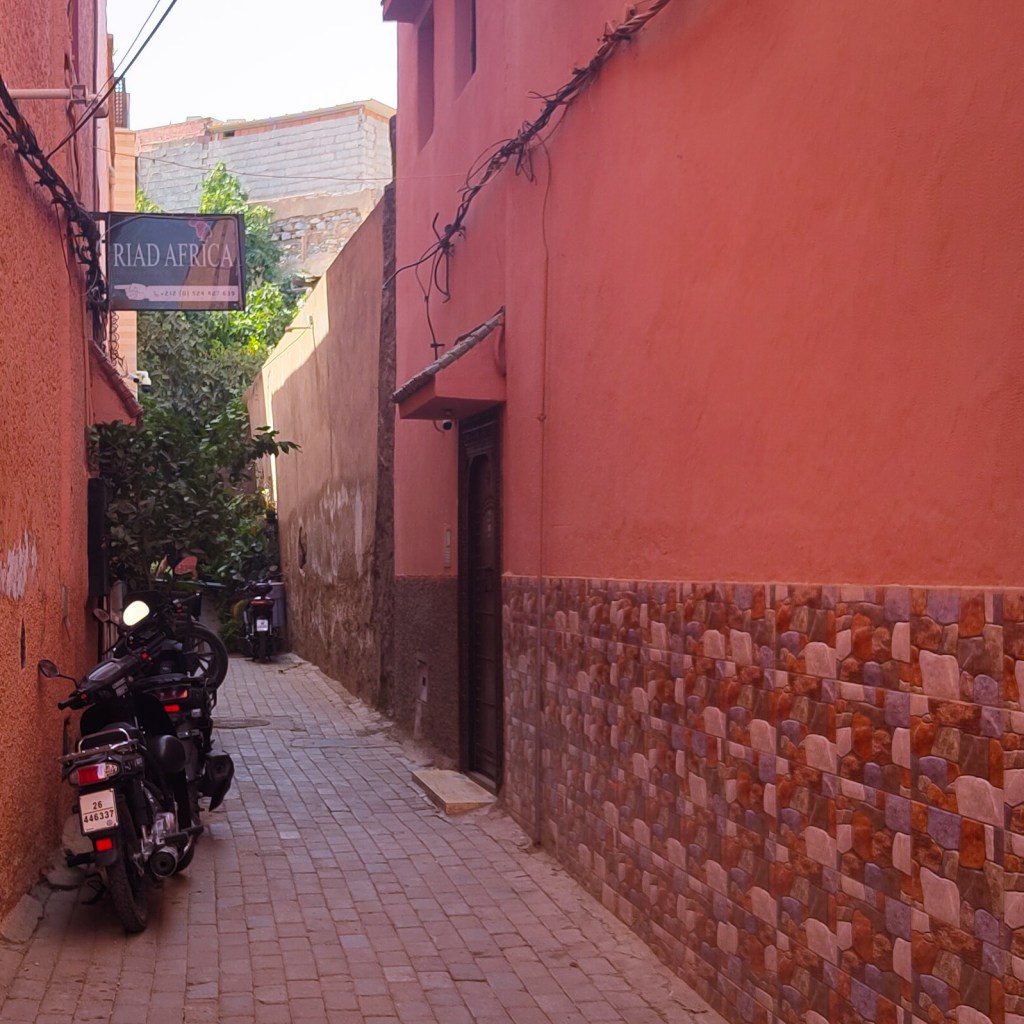
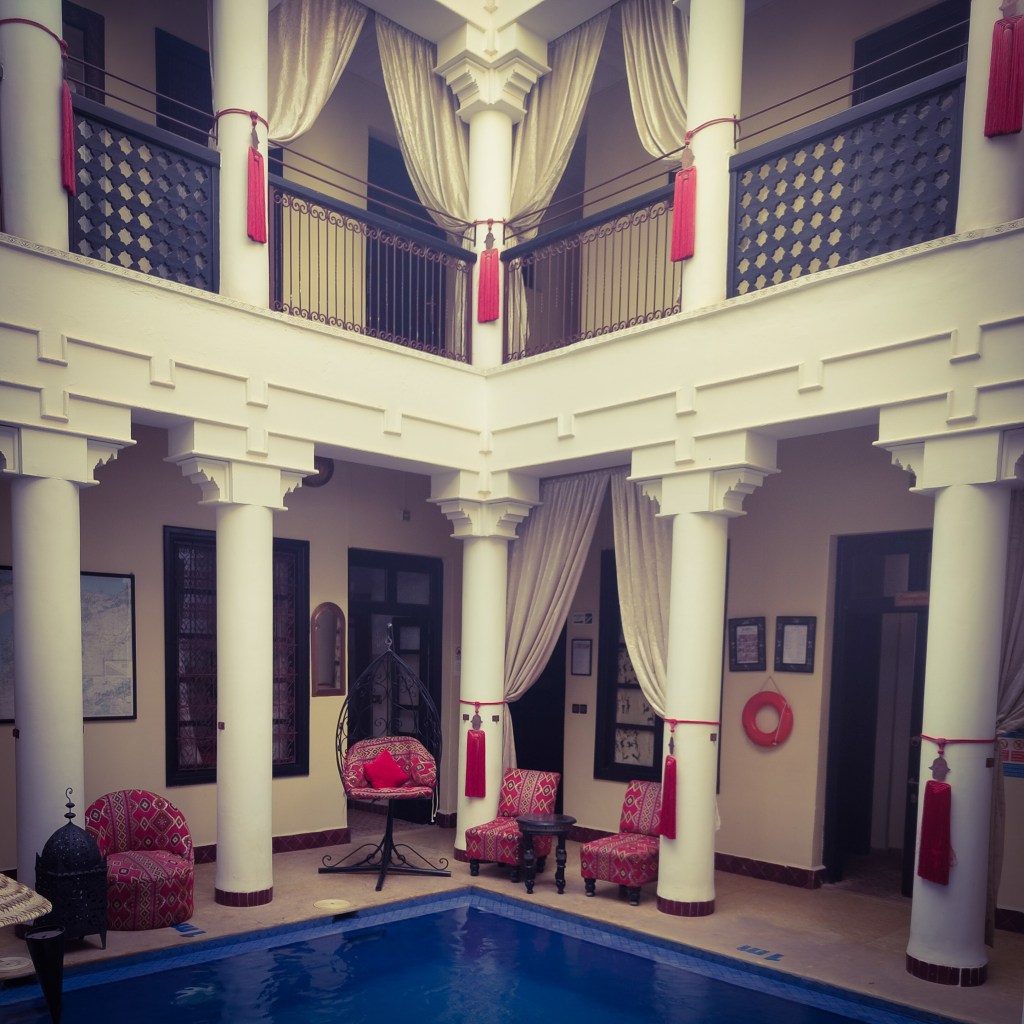
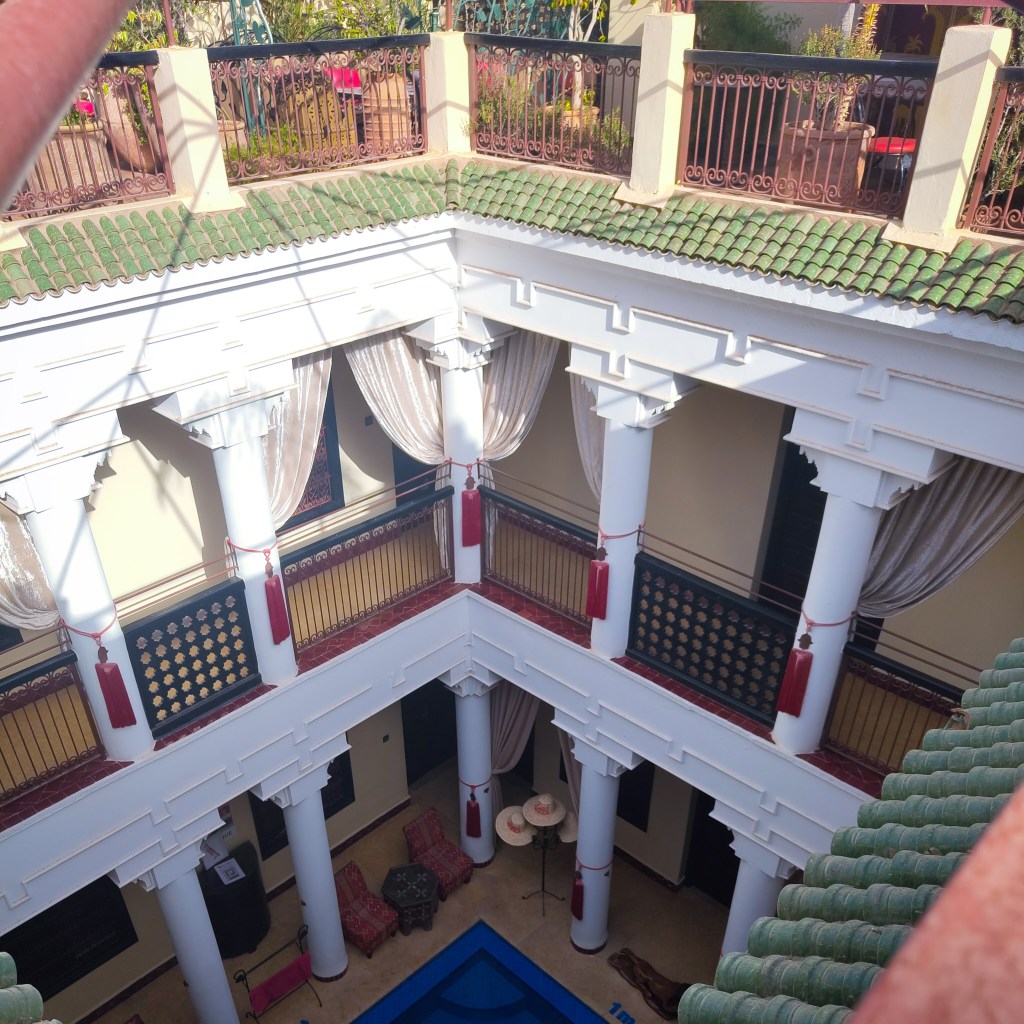
Riad Africa is within the city walls, which is called the Medina. It was a bit difficult to find down a few dark alleys and is certainly not your usual hotel experience. Rooms surrounded a small courtyard pool and had no external windows. The air-conditioning would not go lower than 18 degrees and was just about sufficient. On the positive side though, it was nice to experience something more traditional and breakfast on the roof was basic but enjoyable.
Costs
The cost of food, drinks, tickets and excursions were in general cheaper than average. Even at the tourist traps you can get a Moroccan tagine and a drink for about £8. A necessary bottle of water can be obtained for around 40 pence unless you’re overcharged. In total we spent in the region of £400 on general spending.
Day trips were £100 each for the hot air balloon ride (we did initially pay £50 each but read on), £13 each for a day trip to the Imlil valley/waterfall and the free walking tour was…. about a £12 donation each.
Getting around
The sights of Marrakech are very walkable inside of the Medina but otherwise you’re going to rely on taxis. I did notice more modern public buses that stopped within the edges of the Medina and there is a train station somewhere in the ‘new city’, but they didn’t seem of much use to us.
You’d be glad to know that there’s an airport kiosk that arranges fixed price taxis and cost as we expected having researched beforehand. £15 got us to the central hotel. It wasn’t a long ride but can’t complain. With being able to barter for the return journey it cost £10.
The only other thing I would add here, is that your visit inside the Medina may be a bit of a culture shock if you’ve only been to Europe. Luckily we’ve had experience of similar locations such as Giza and Jordan but you never really get used to shopkeepers constantly hassling you and kids begging on the street. Even the man who offered to direct us to our hotel asked for money (I say offered but we didn’t have much choice but to follow!). Don’t assume anything is complimentary.
Even arriving at 11pm everywhere seemed really busy. Pay attention when walking for the usual trip hazards, rubbish and billions of mopeds. As usual in these type of places the traffic is carnage yet you never see an accident?!
The ‘new city’ I mentioned is an area called Gueliz and within walking distance of the Medina. Here lies the more Western types of hotel and shopping options, the train station, and I believe the city’s only McDonald’s. We didn’t visit the actual centre of Gueliz but did go to a mall for tea/aircon one evening, just 25 minutes from our riad within the Medina walls. A top tip if your worried about the contrasting culture, would be to stay in one of the resort hotels and just dip in and out of the chaos of the Medina as you see fit.
Itinerary – Day One
Our departure date was a day after Bristol airport temporarily closed and cancelled flights due to a runway defect, so we were lucky in that our afternoon flight was only delayed by an hour, arriving in Morocco three and a half hours later at around 10pm.
Top tip: get cash at the airport. You’re going to need it at some point and for us, 80% of places where we spent money was cash only, including taxis and most restaurants. Grab a SIM card too if you need one.
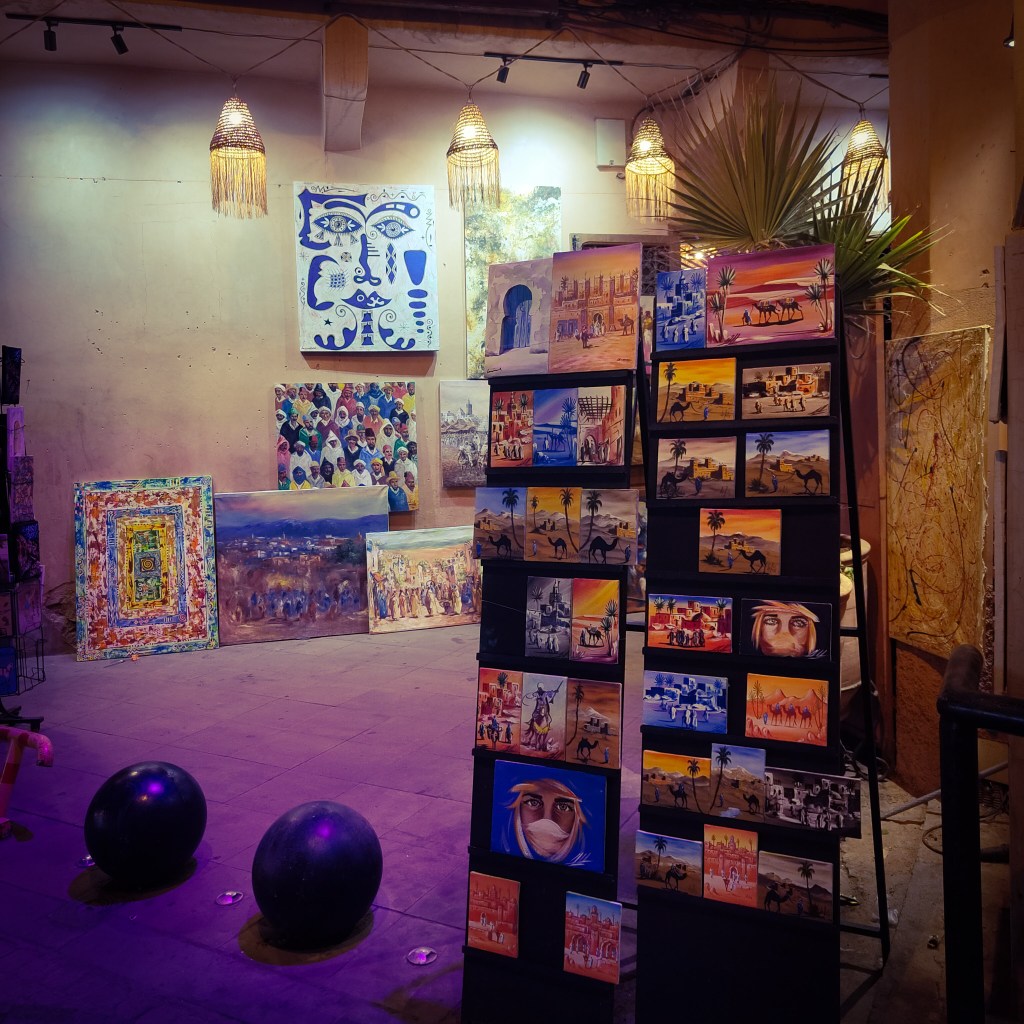
Little did we know quite how narrow the paths were leading to our hotel, so had to walk about 500 yards to our riad. This also meant that hotel pick up options selected for our upcoming tours were null and void and we’d have to walk 5-15 to an access point.
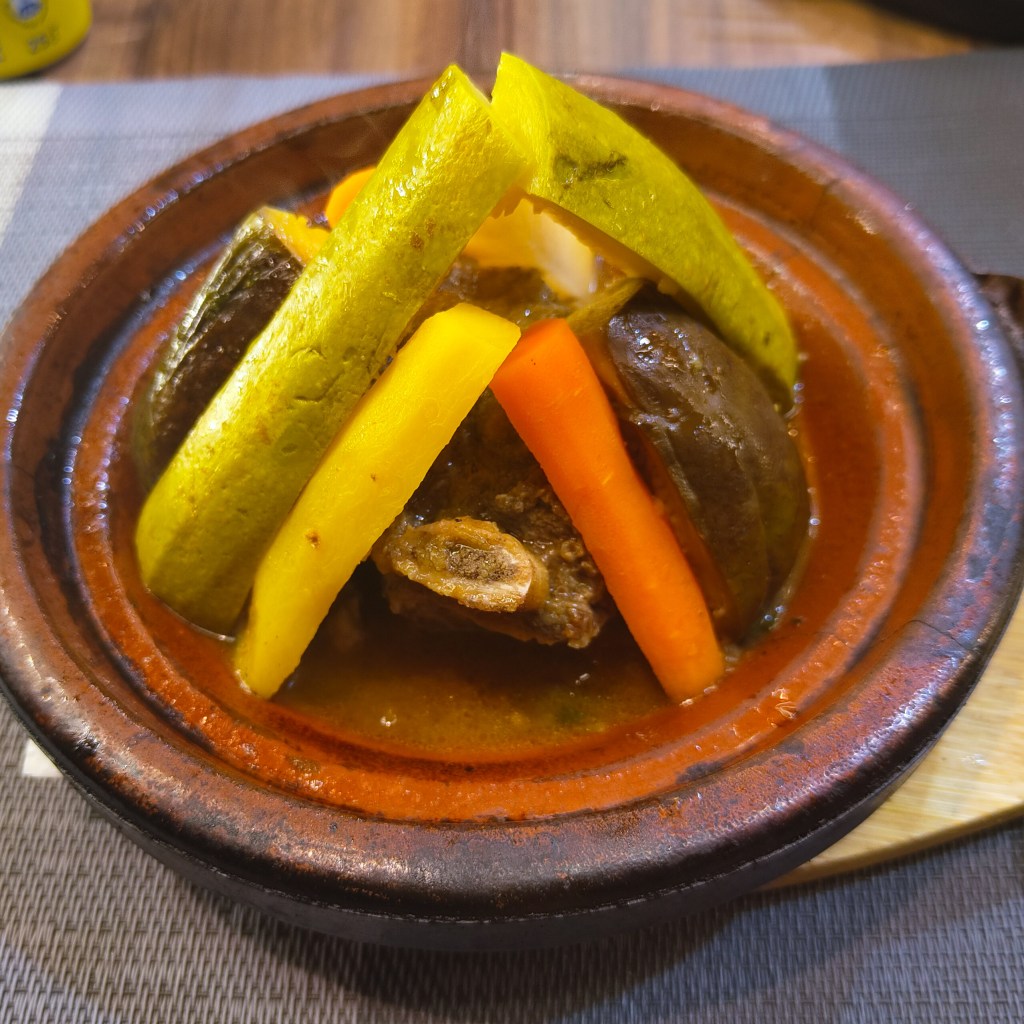
After checking into our hotel we were fortunate to find a nearby cafe/restaurant which was a bit of a tourist trap but okay. For around £25 we had four soft drinks, a traditional beef tagine, chicken with cous cous and vegetables, and shared some small chicken skewers and fries. After collecting a case of water we were done for the night.
Day Two
Breakfast on the rooftop of our riad gave us fond memories of our first full day as an engaged couple in Egypt. Breakfast through the week was simply boiled eggs, cereal, and about six different versions of bread with expected condiments. It was ample but some hot falafels would’ve been nice!
Our walking tour today was from 11am until 2pm so we hoped to miss the hottest part of the day around 4pm. The meeting point was the main square, Jemaa el-Fnaa and this was one of about 10 visits total. The scuttle through the Medina ‘rat runs’ was something I won’t miss, but you do climatise to some degree.
We met Mofasa through the GuruWalks website and joined the tour with, typically, a family from Wales and another couple.
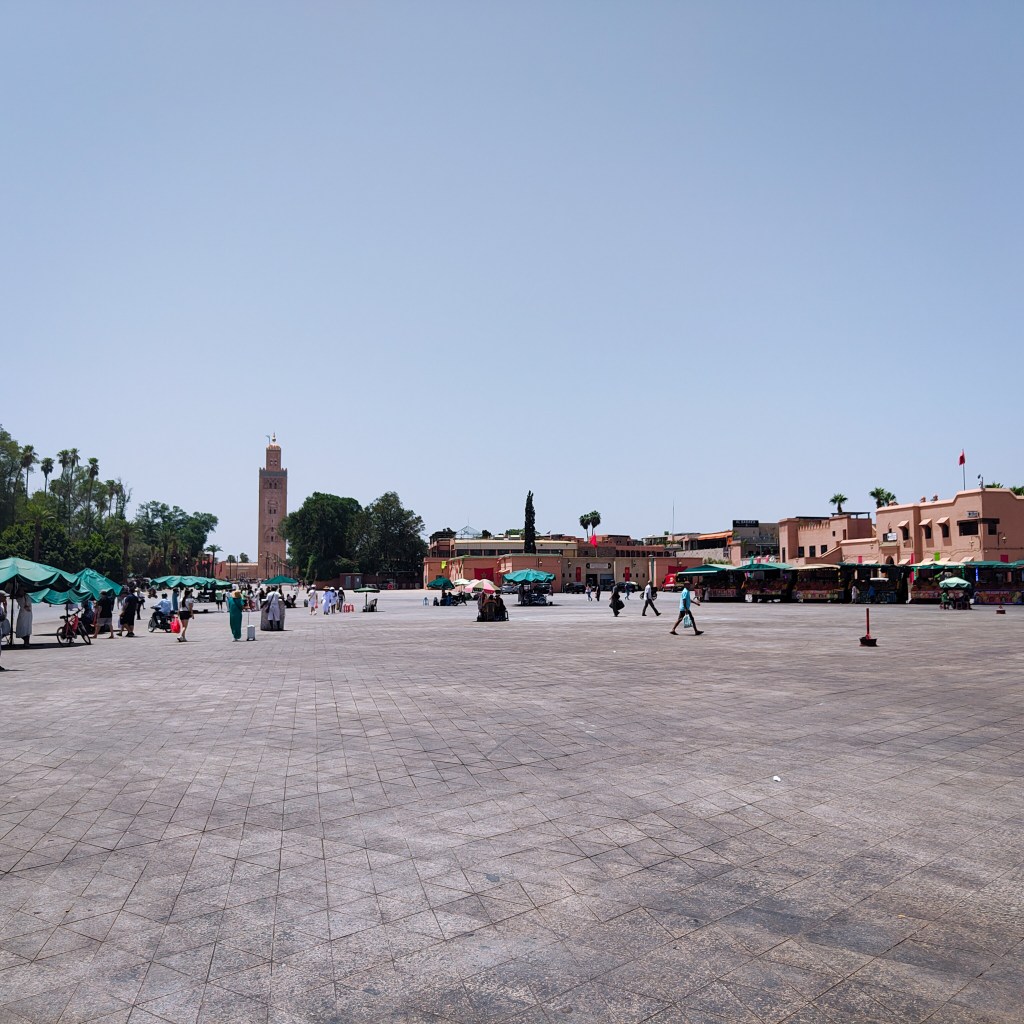
Initially wandering around the square, Mofasa explained the night-time is when it gets really busy. He also provided some history of the city and the walled Medina, the set prayer times for the many mosques visible, even referencing a location of a bomb that was set off by a domestic terrorist in 2011, followed by interesting excerpts from the Qur’an and how extremists are able to bend the content to influence locals who live in such poverty.
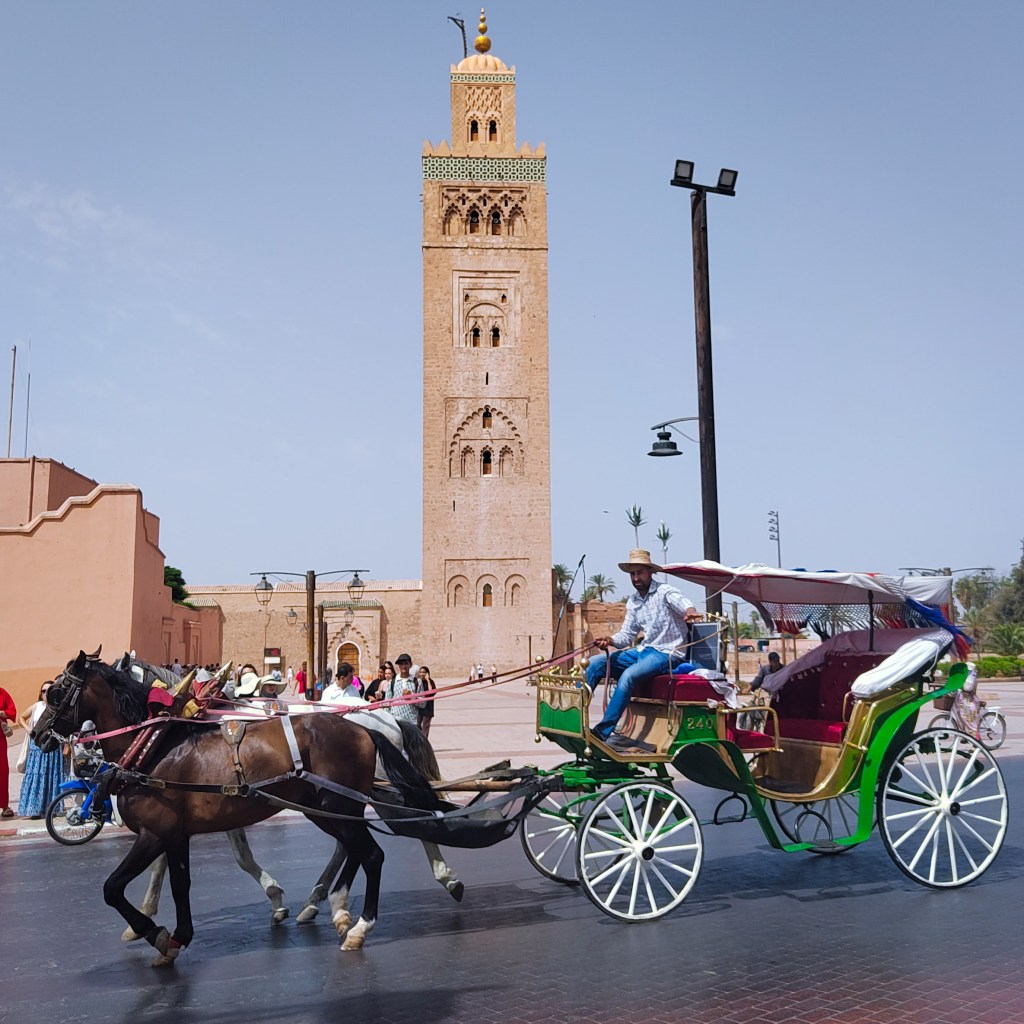
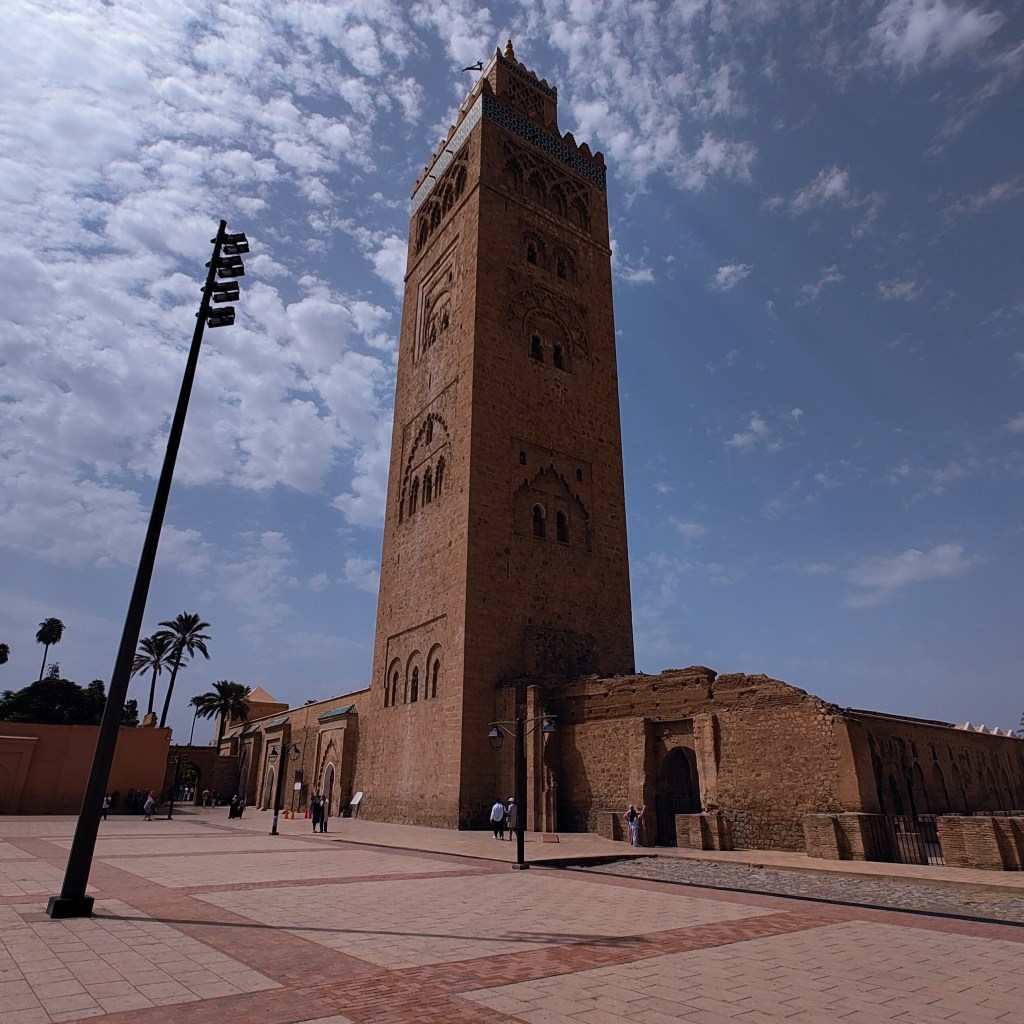
From Jemaa el-Fnaa square we moved the short distance to the Koutoubia, the most recognisable sight in Marrakech. The mosque was contructed in the 1100’s and lives next to the previous version which is now a small ruin.
The trip isn’t going to be heavy on fun facts but the Koutoubia is a ‘twin’ of the Giralda in Sevilla (Spain), known as the Seville Catherdral, having been converted from a mosque in 1248.
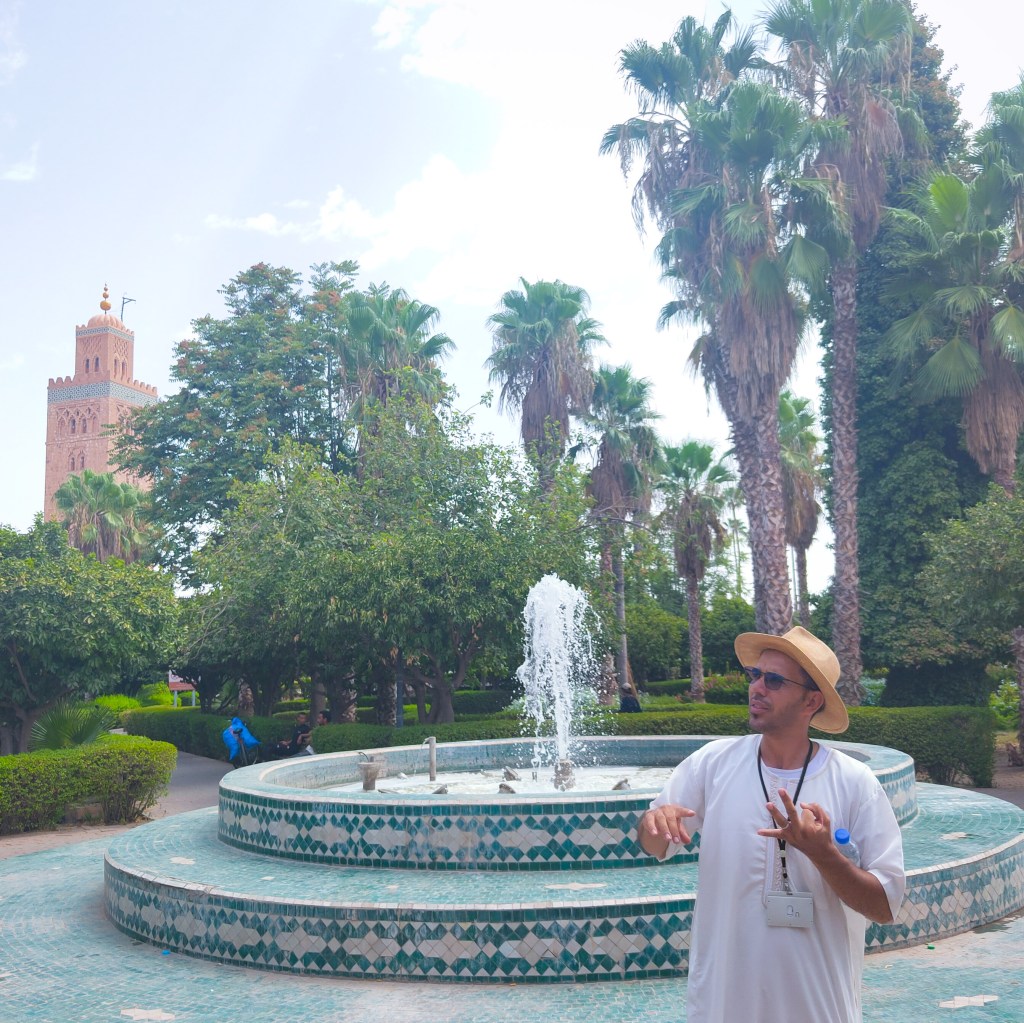
Next we walked through a garden that allowed a few decent photo opportunities and Mofasa pointed out an old massive hotel seconds away from the Koutoubia, which Cristiano Ronaldo purchased a few years ago and has since left unoccupied. Why or what happens in the future I don’t know but it all seemed a bit knob-ish.
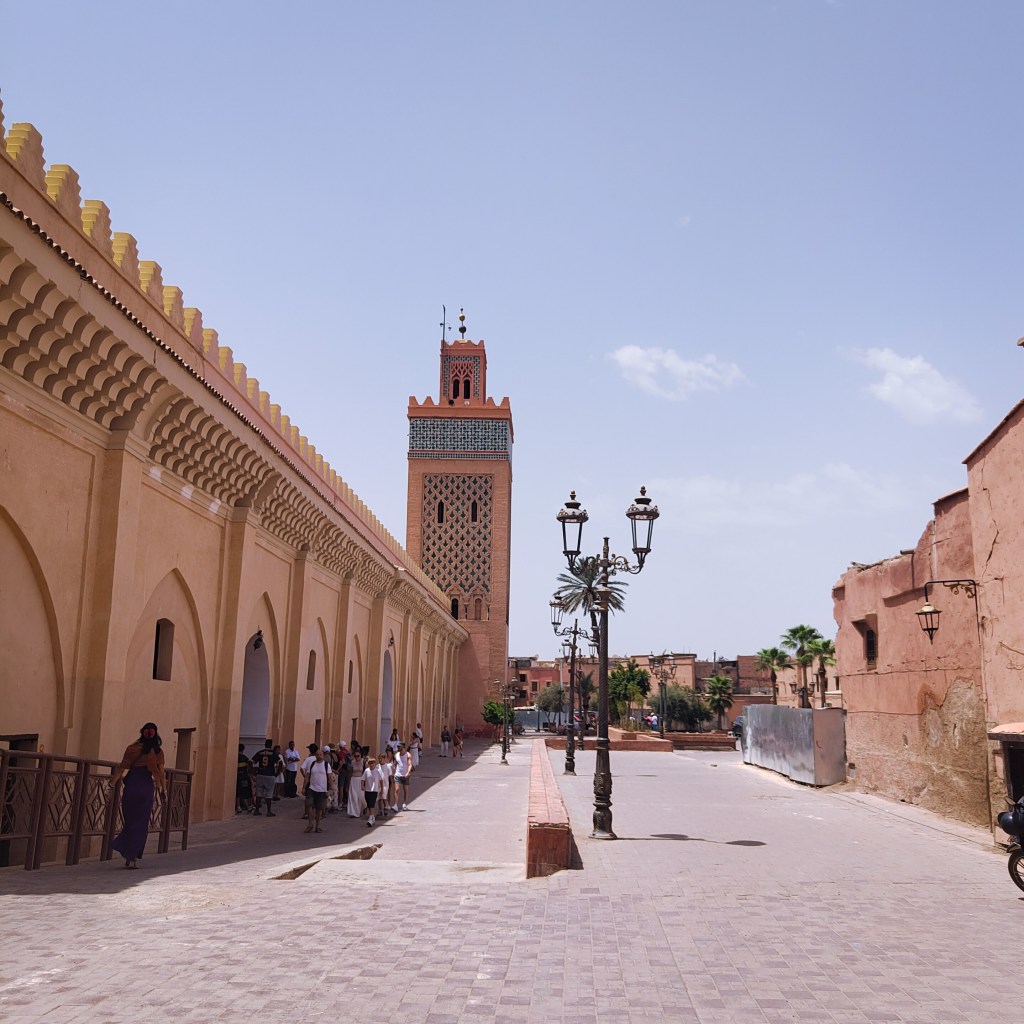
Back onto the dusty streets we walked alongside the guarded Royal Palace, which did not allow visitors, or viewable due to its 20 foot walls. We visited the ‘kasbah’, which is kind of a walled mini district of the Medina, within the Medina. After being told of some buildings that housed tombs of former important people, as it did previously as a citadel, we seamlessly joined the Jewish Quarter. After World War Two most of the population moved to Israel but there are still a good number of businesses, gold market and a visible synagogue, cohabiting with their neighbours who are not shy about their support for Palestine. The guide was positive as to how the Moroccan regime manages to handle the ongoing tensions and he didn’t mention any significant unrest in the city.
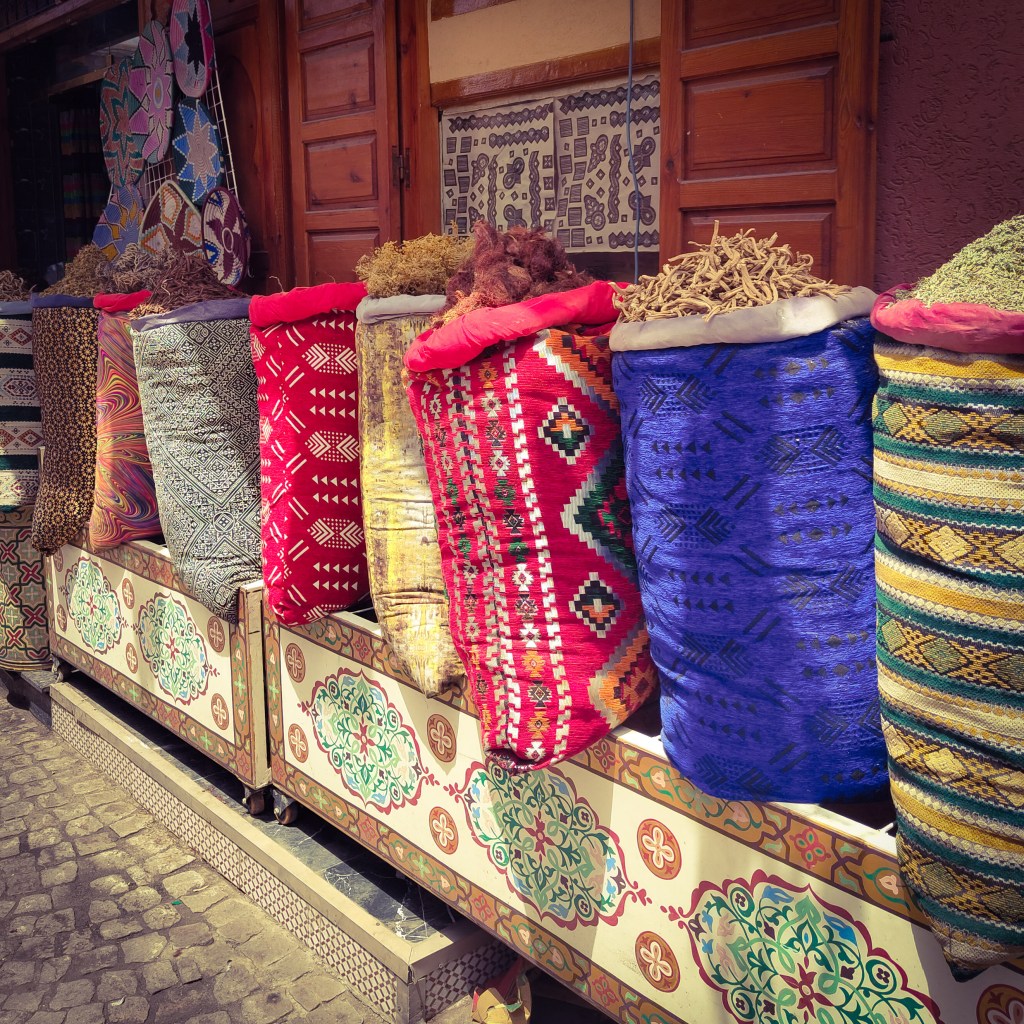
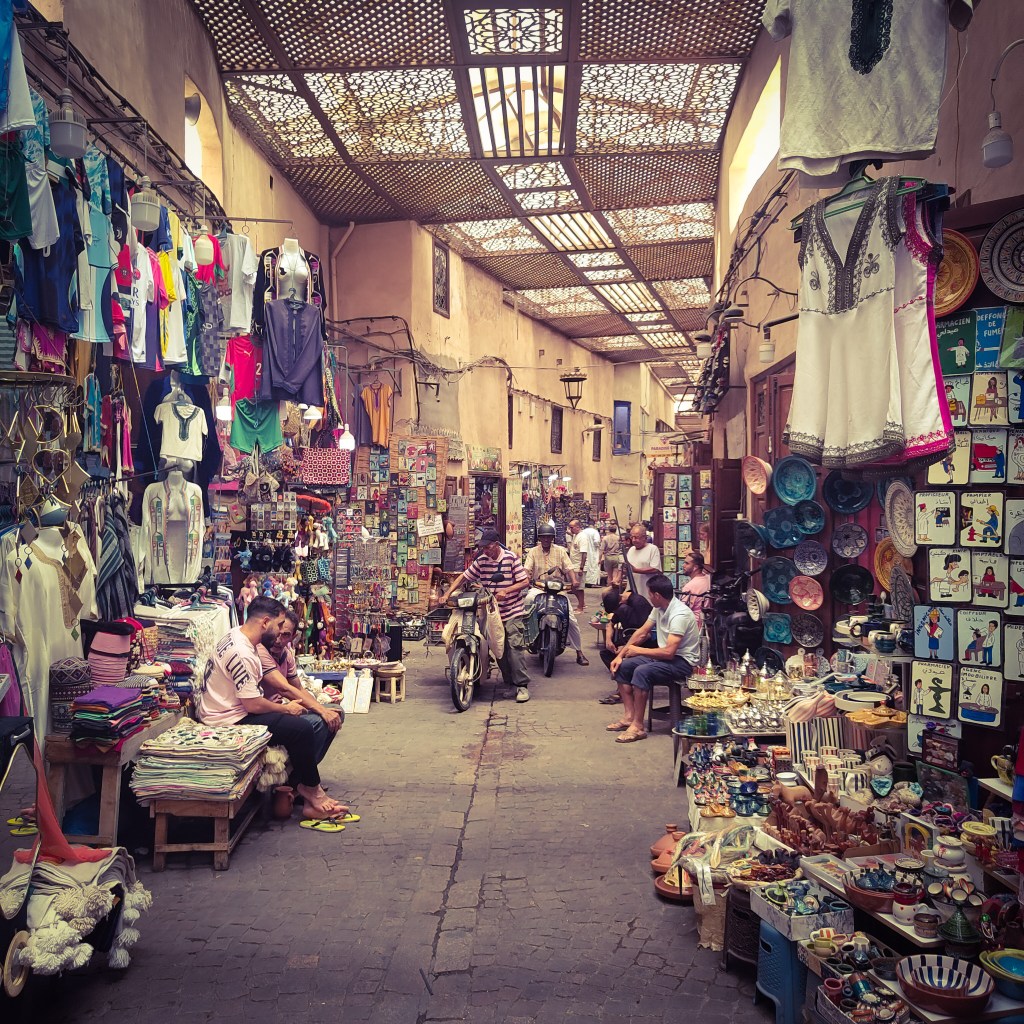
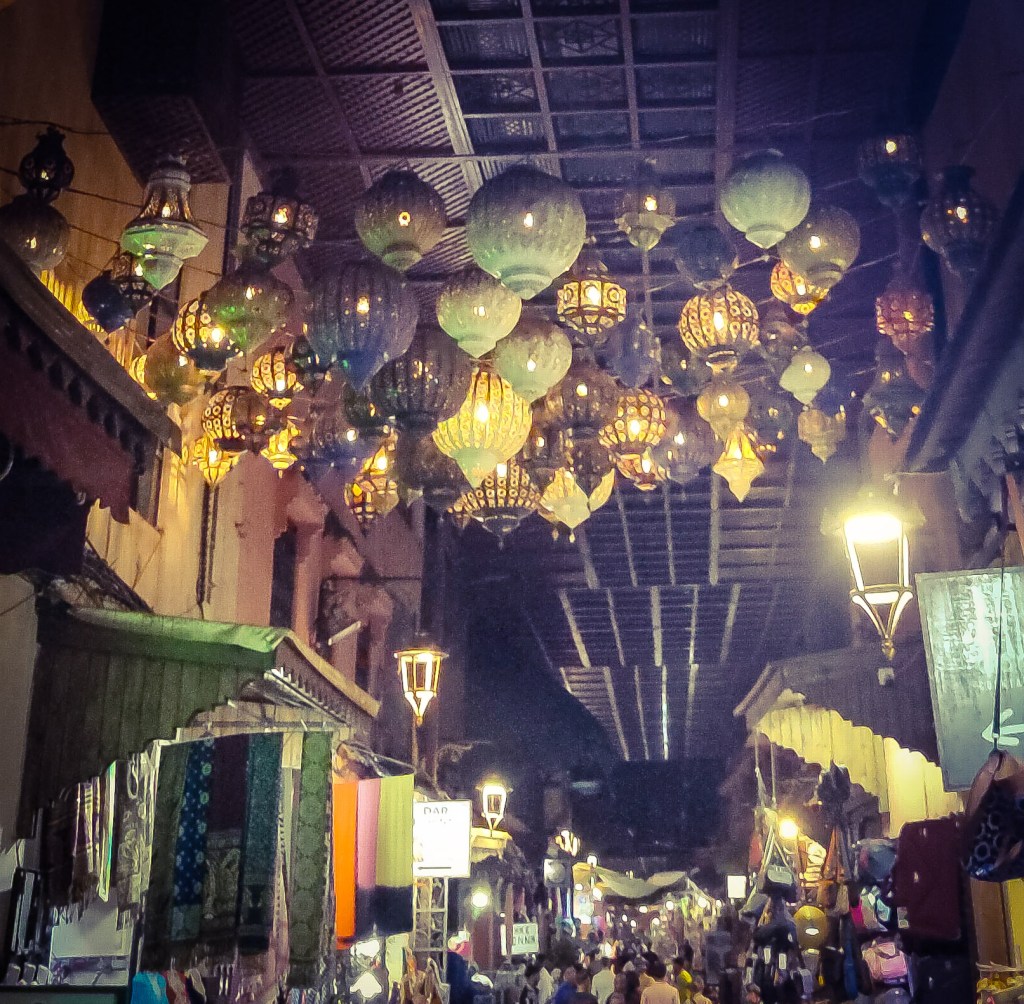
We were almost making our full circle, bar another long walk through a narrow market street. Hundreds of souvenir shops all selling the same things… Back at the square, Mofasa pointed us to the entrance of the main souk, another labyrinth of market which I couldn’t tell much difference from the rest of the narrow Medina streets, and we said our goodbyes.
I couldn’t complain about the tour as we paid what we wanted and it was interesting enough, with a massive bonus of finding our bearings. I do wish he chucked in a few more fun facts (maybe there are none?) and not to have a pit stop half way was annoyingly harsh. It was 40 degrees and any water we had left was evaporating. It may well show above that I ended up being a bit half arsed for the last hour and wanted a litre of cold water and lunch pronto! I’d rate the tour 3/5 and I’m being generous.
Shamelessly walking into KFC to use the toilet, we decided against staying for food and instead had a sit down at a small kerbside burger hut, which was definitely on the fancier side of burger in the area. After all, a filling meal and drink cost over £10 each!
And then it was time for a well deserved nap.
It was the first whole day and already we had a guts full of the Medina! I think I’m half joking.
In the evening, we needed a bit more space and quite so looked at the new area I mentioned in the introduction; Gueliz. I think a lot of wealthier tourists stay in this area in their all inclusive resorts and brave the Medina a few times. I can’t blame them but the blog would be even shitter if I did that! Let’s be honest, you don’t want to hear about me living the life of luxury do you?…
We did however walk to the mall, for several reasons including aircon, not being hassled, numerous choices for dinner and some drinks and snacks for our trip tomorrow from a Carrefour (massive supermarket chain mainly in mainland Europe).
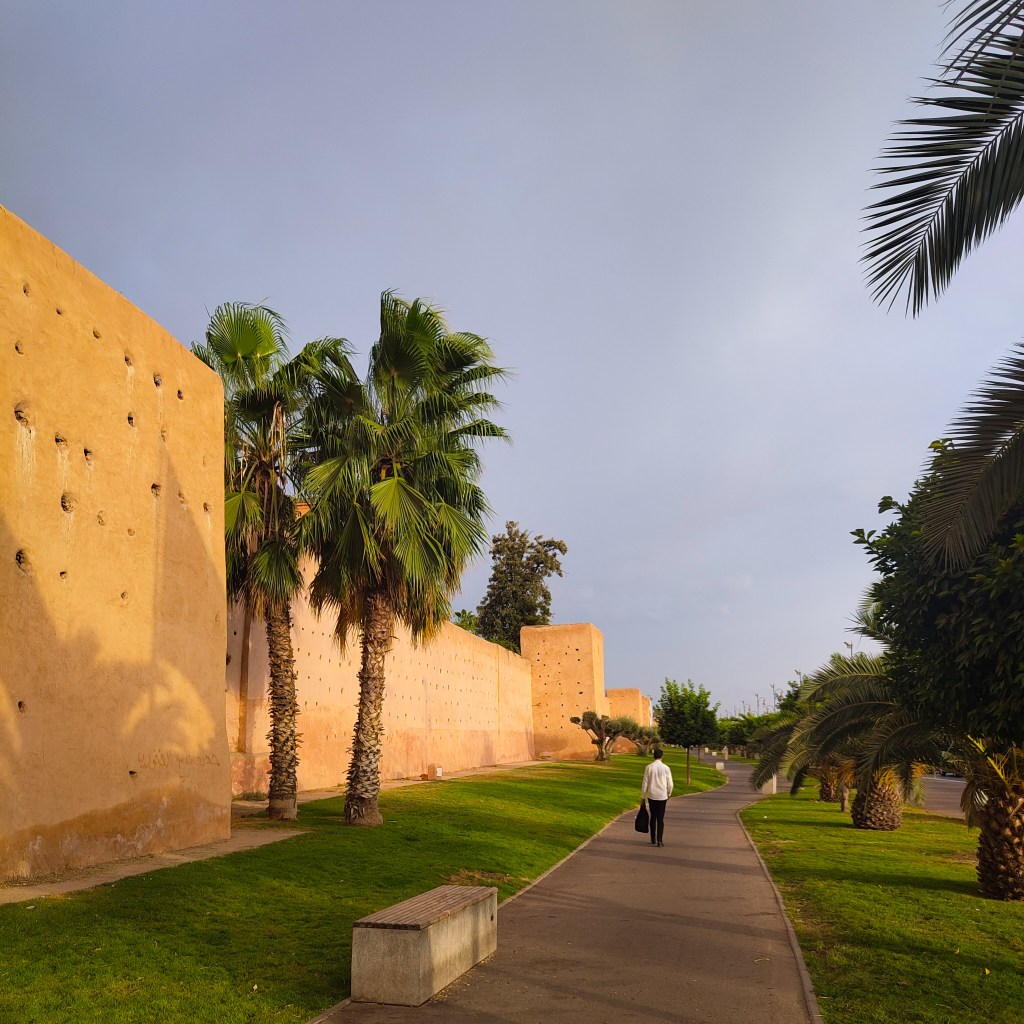
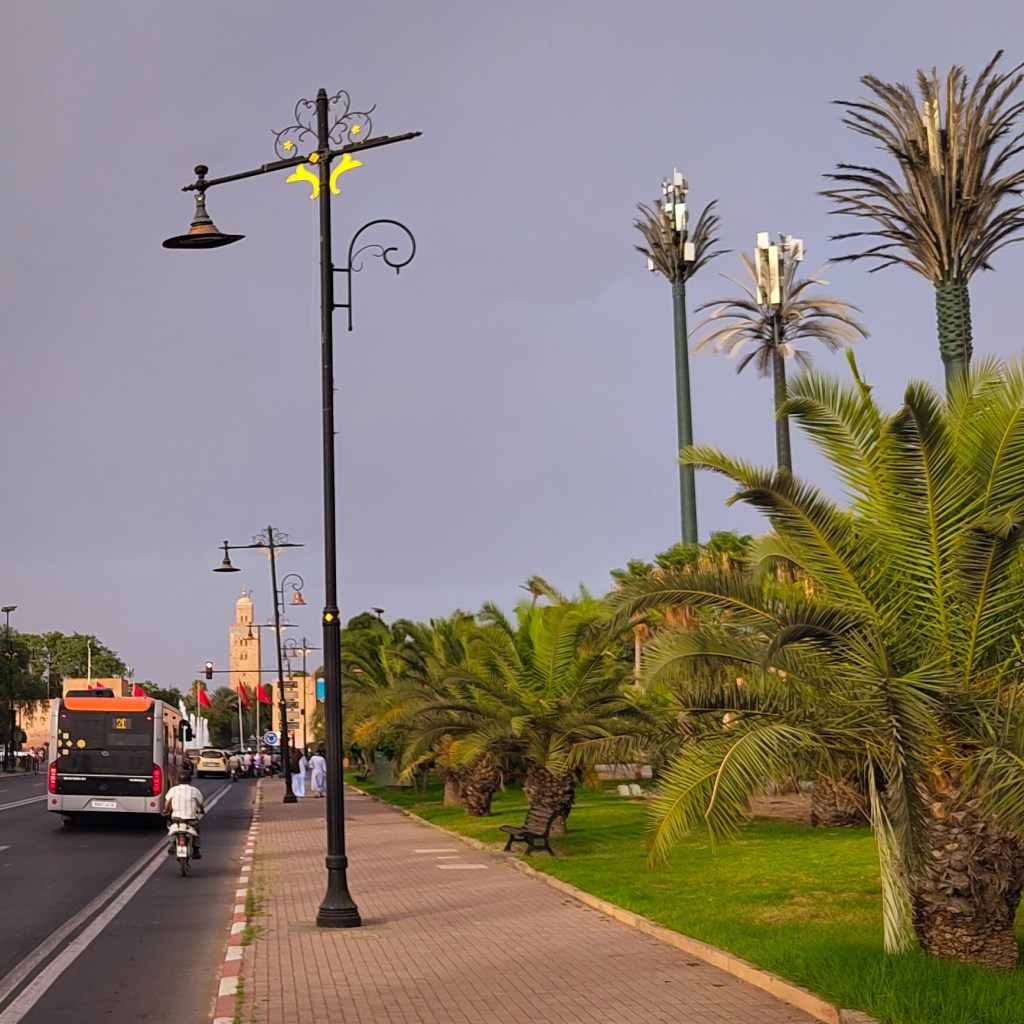
The walk was a nice change, as you exited the thick Medina walls you were instantly walking along a spacious, modern boulevard that is currently very sparsely populated one side and hotels on the other.
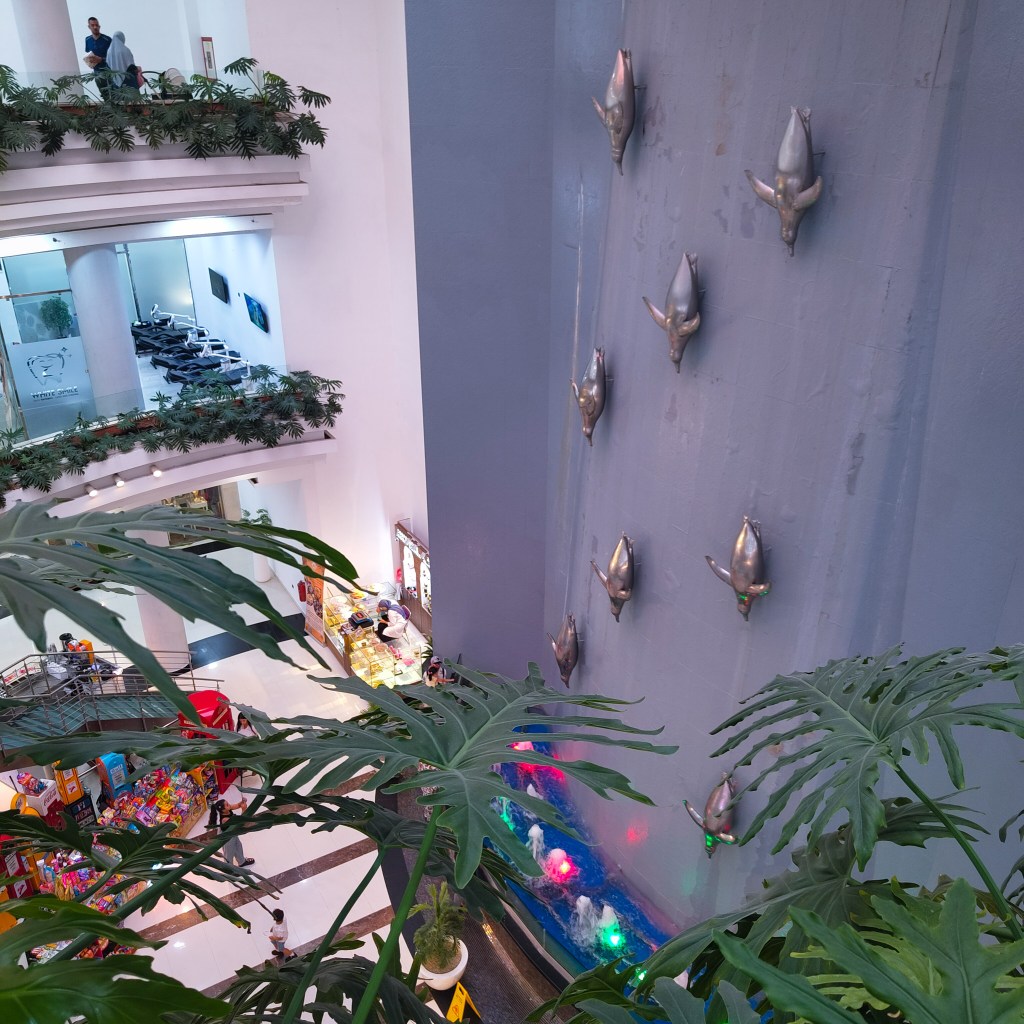
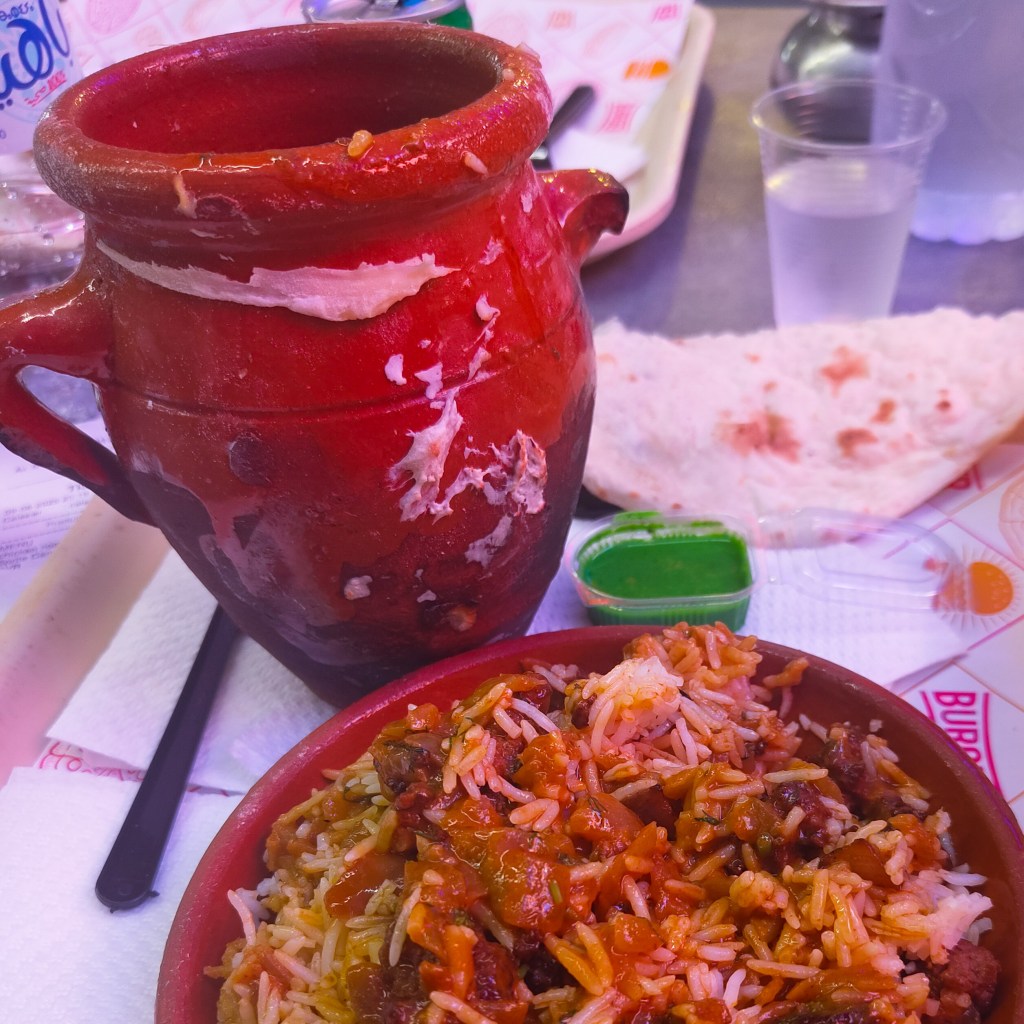
A shopping mall isn’t that interesting so I won’t waste lines on that but for tea I had a lamb biryani and Mikayla had chicken noodles which were fabulous for an Asian food chain. Bollywood diner or something. Mine even came in a bread topped pot, which in fairness did look rather Moroccan!
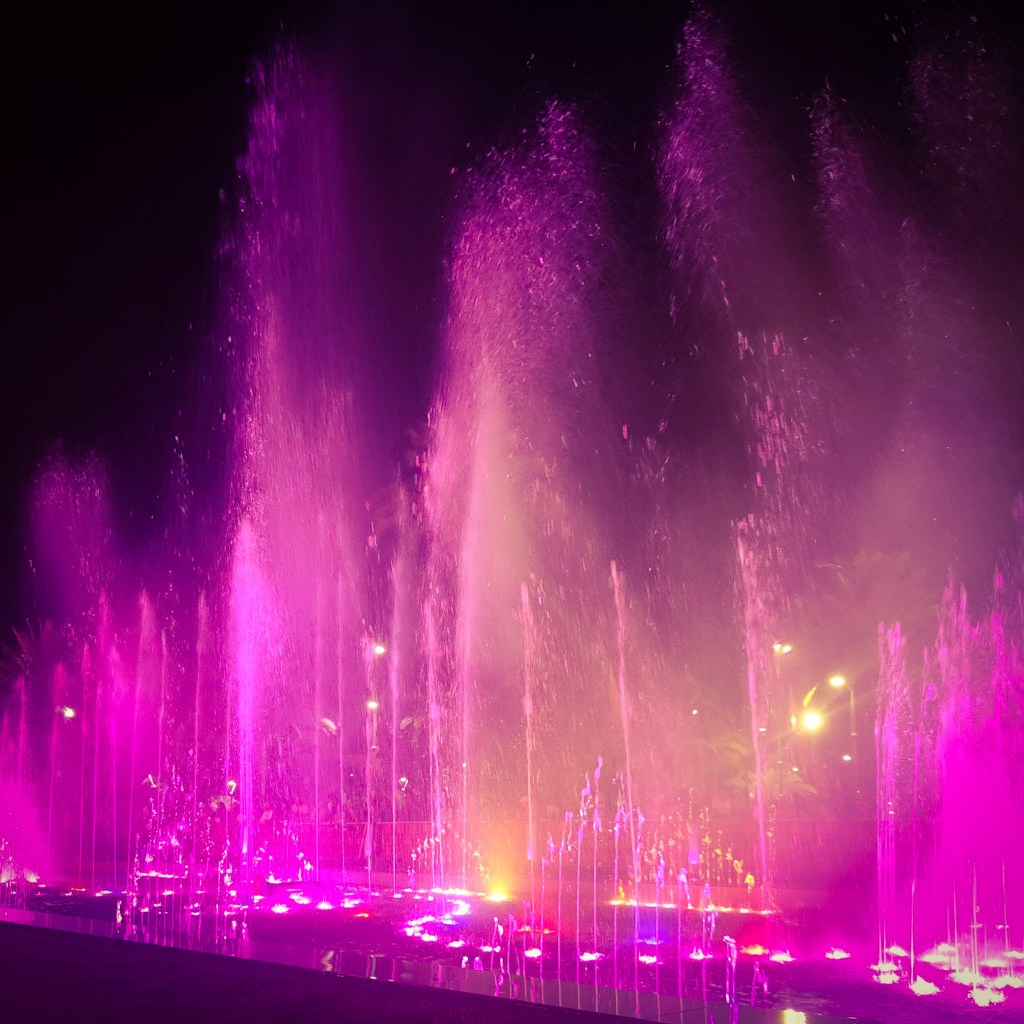
I’ve since learned that our £8 taxi back to the hotel was too much, but it at least meant we grabbed one within minutes of leaving the supermarket with 16 litres of fluid, taking a moment to enjoy the singing fountains outside. Succeeding 25,000 steps today, our return to the hotel was bliss.
Day Three
Today was our trip to the Imlil Valley in the Atlas Mountains, with the highlight being Imlil waterfalls after a hike uphill. This was the tour booked on Viator (link) and cost just £12 per person that included pick-up from Jemaa el-Fna square in a modern air-conditioned minibus.
The 90 minute drive to Imlil was broken up with a visit to a Women’s co-operative. Whilst only a five-minute presentation, it was interested to see and hear how kernels of the argan tree are ground and bled (?) for the oil. Argan oil is a versatile plant-based oil from Morocco, used for skin, hair, nails, and culinary purposes, rich in essential fatty acids, vitamin E, and antioxidants. I wouldn’t be surprised if it can fuel your car as it seems to do everything else!
This was evident once we were taken into their little shop selling about 30 different products. Mikayla was especially impressed by some blusher and was well aware that the £10 purchase price was a bit steep but towards a good cause.
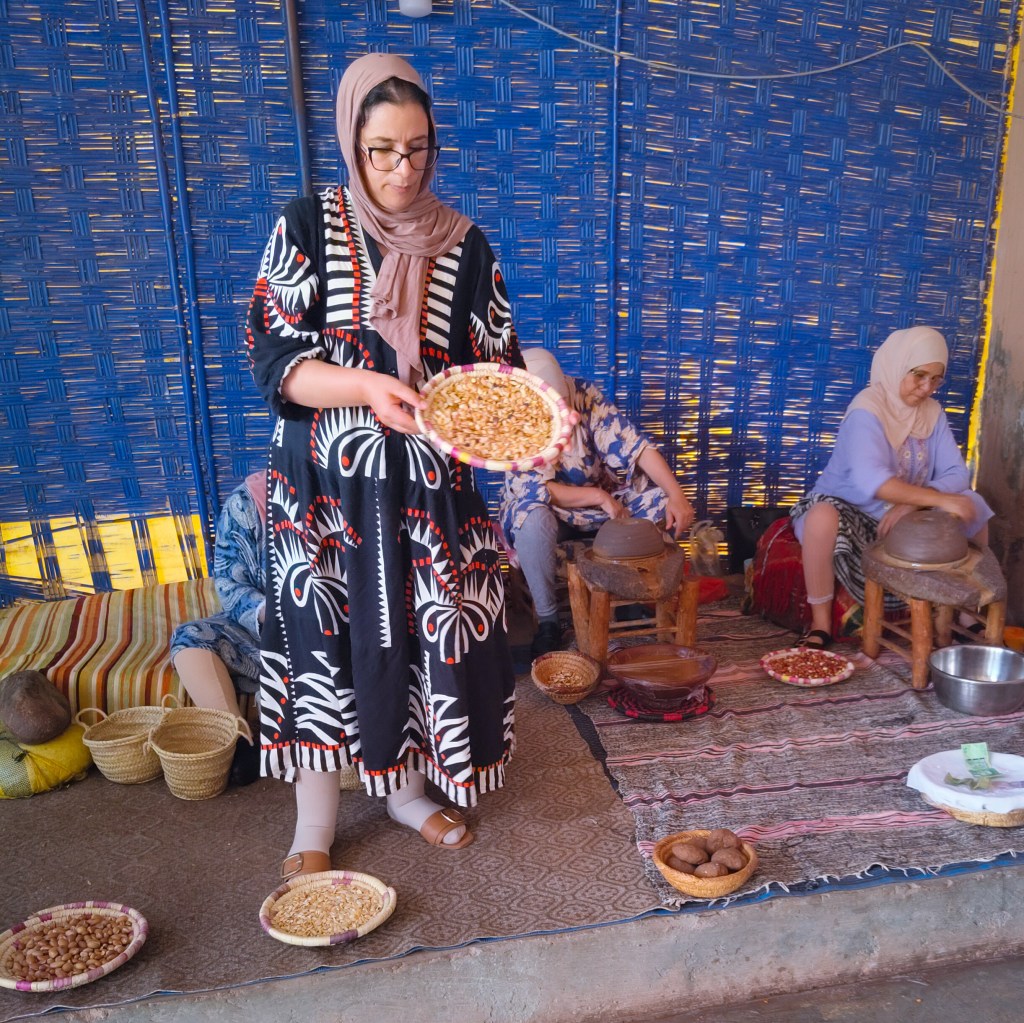
It was advertised that we would have breakfast here, which transpired to be a little piece of bread to break up and dip into four different oils.
On arrival in Imlil we met our tour guide, a Berber lad local to the area. The first ten minutes of what we thought was the hike, was ultimately a visit to his house in the hills to be served tea and a handful of various nuts.
At this point he would the group of 15 of us that the hike to the waterfall was 1000m up. If the hike was actually more arduous than Pen Y Fan in South Wales, in the heat, I wouldn’t be writing this.
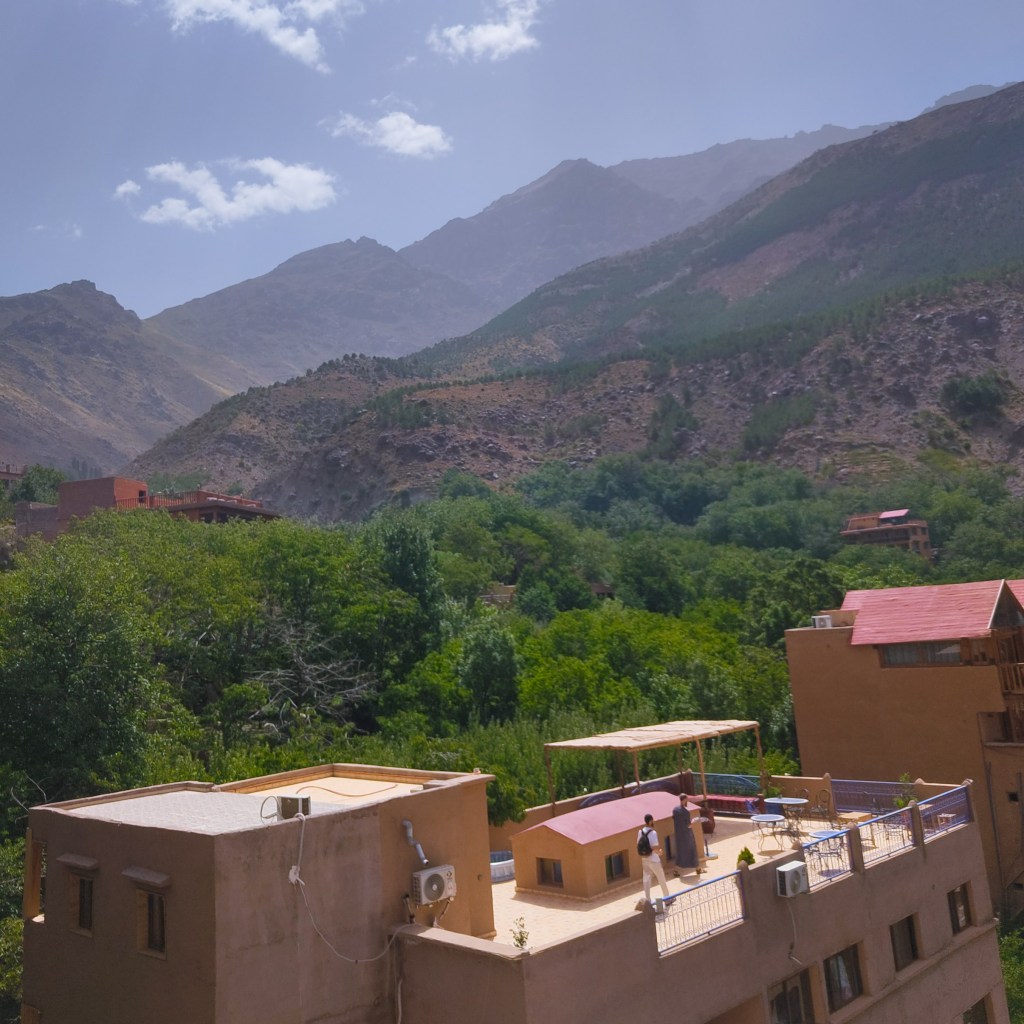
What he meant (I think) was that the trek was around 1km rather than the climb. After frustratingly walking back down to where the minibus dropped us off (and already consumed my water before topping up at a local shop), we started climbing the other side of the hill to the waterfall.
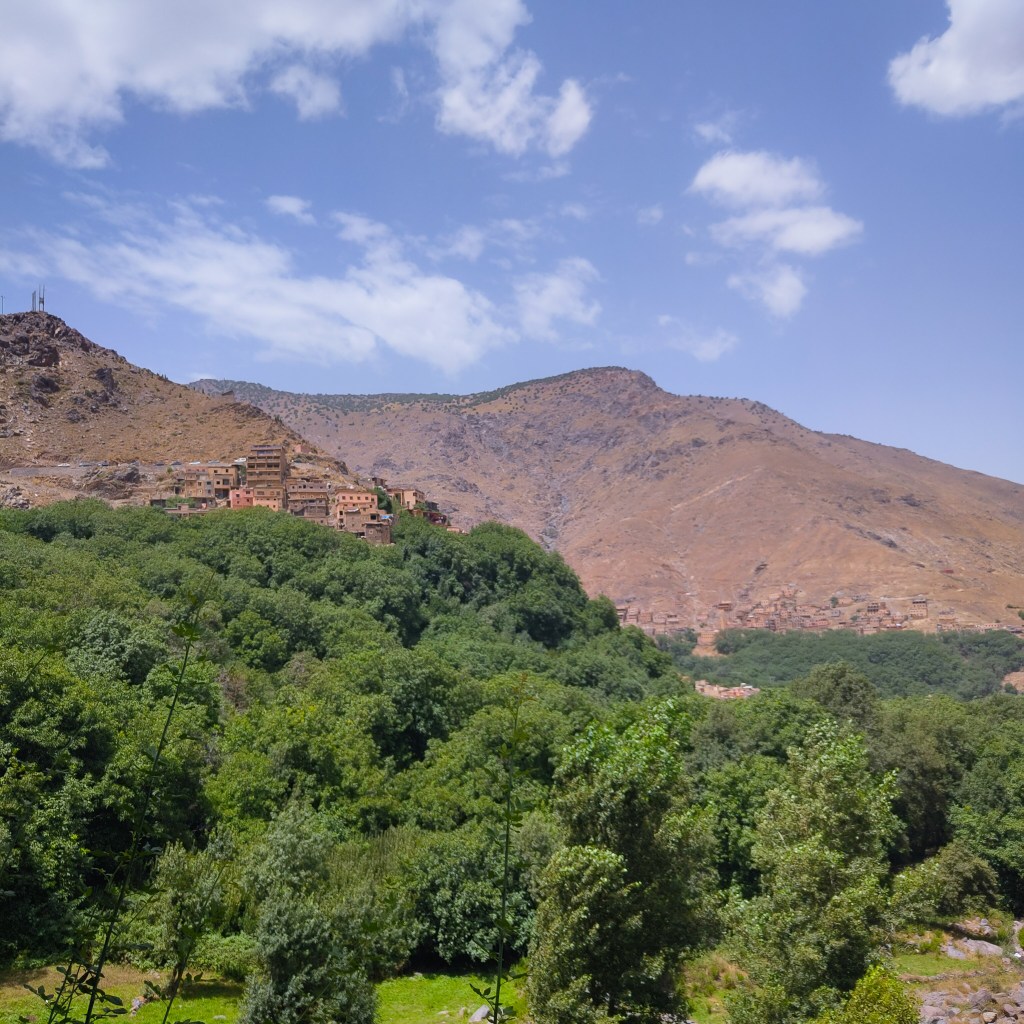
Thankfully the walk afforded lots of shade under trees and whilst the terrain was tricky, it didn’t cause too much exertion slowly meandering along the stream to the top.
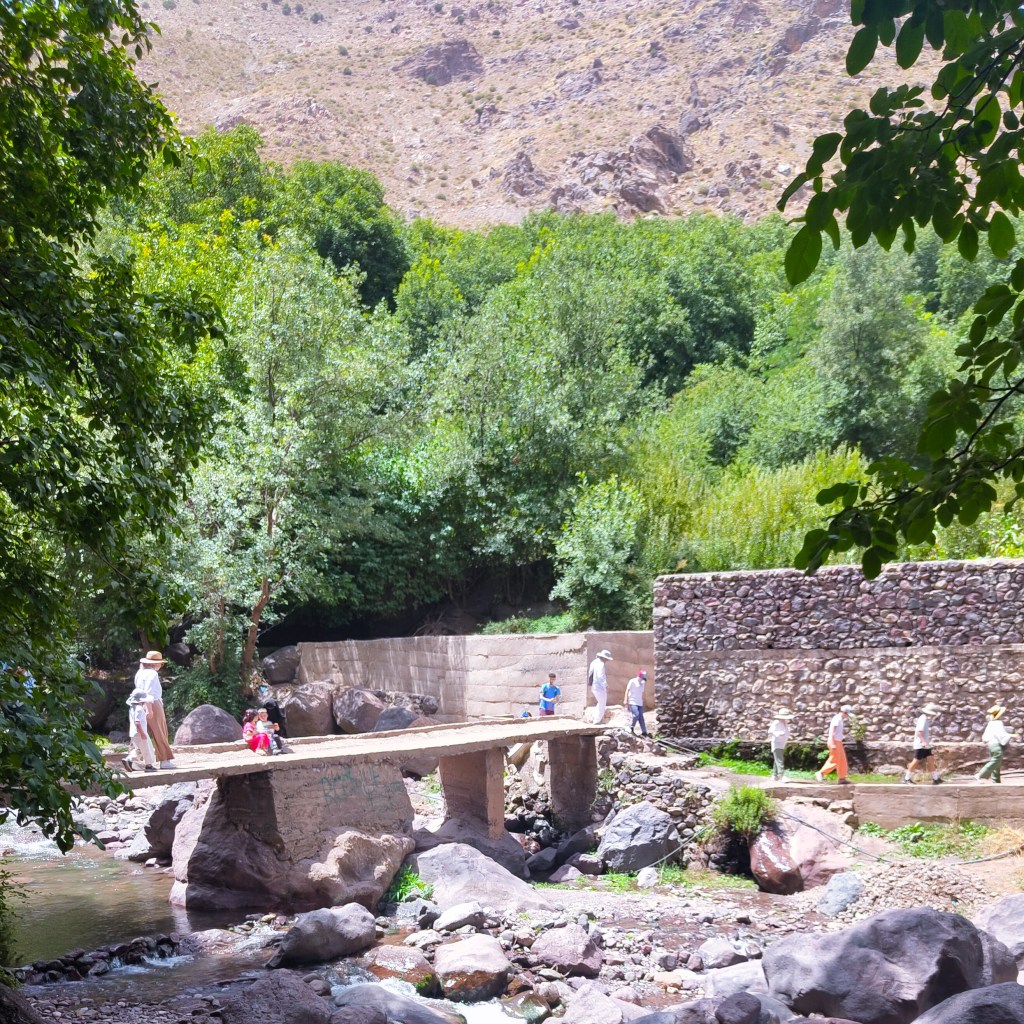
It was very busy near the top and a few stalls appeared as the trail flattened out. The walk was made easier by other members of the party being a couple from Wolverhampton and a US family with a few of the latter’s kids setting the pace.
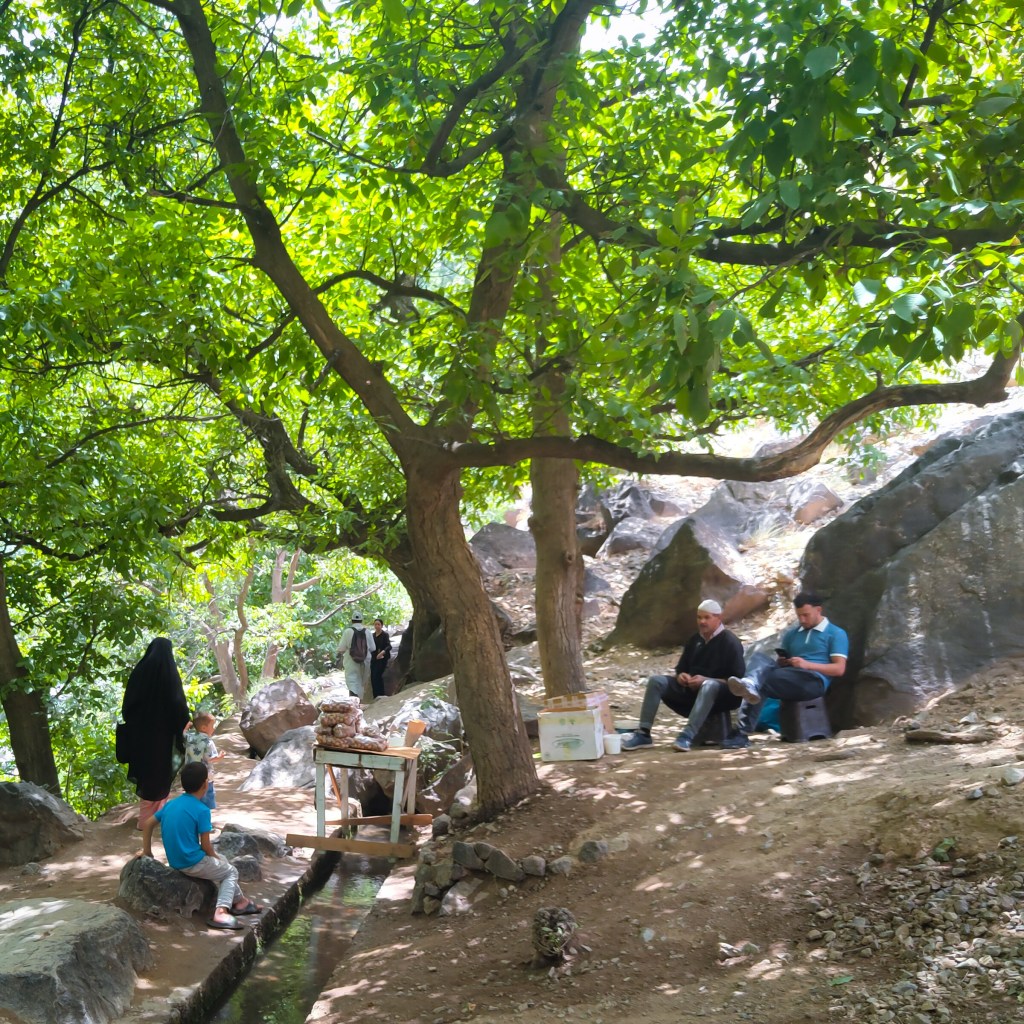
On the approach to the waterfall it was very busy with locals, which was to be expected given the heat and lack of swimming opportunities anywhere nearby I’d guess. We were told that for the ten little villages spread out in the hills, there are two schools and many kids make this journey on a daily basis!
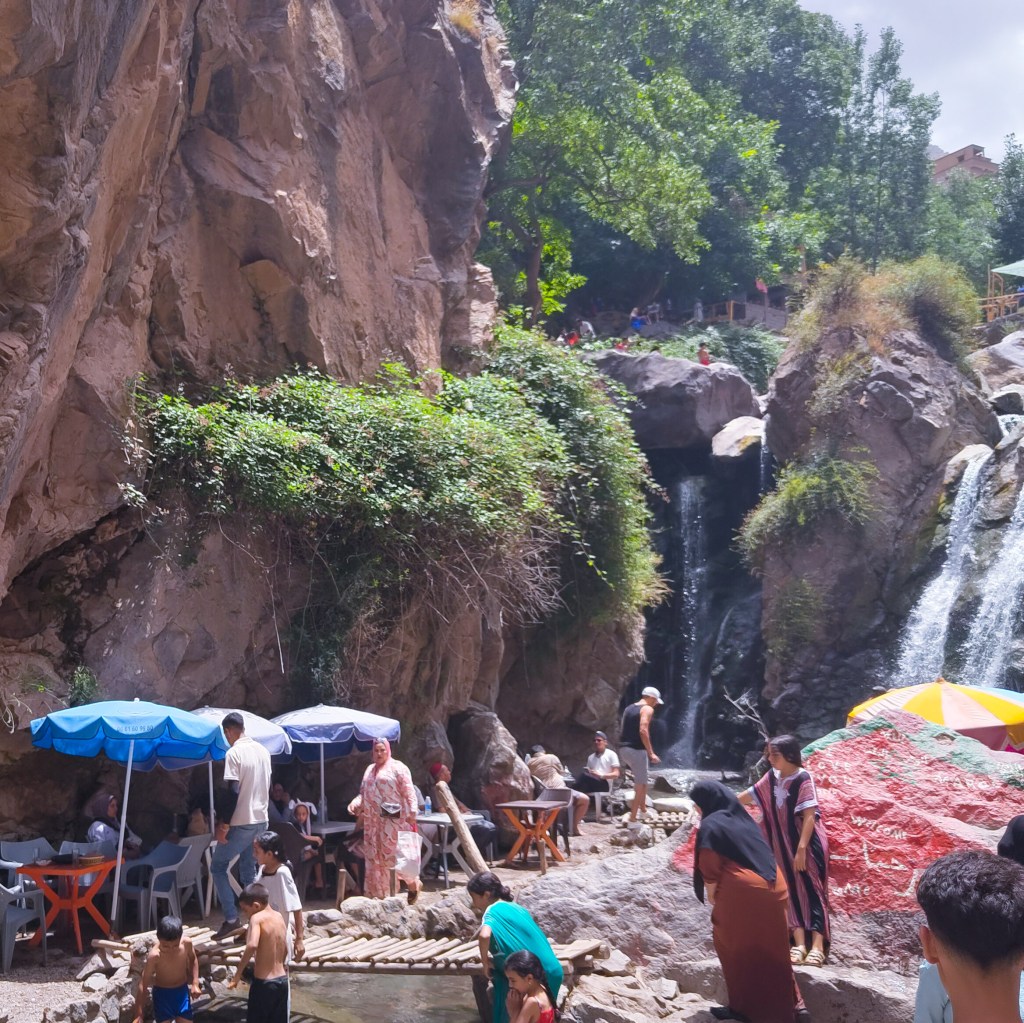
Now call me spoilt but the waterfall itself was a bit of an anti-climax. Having honeymooned to Iguazu Falls in South America I never need to see another waterfall, but our own back home in the Brecon Beacons are much more impressive.
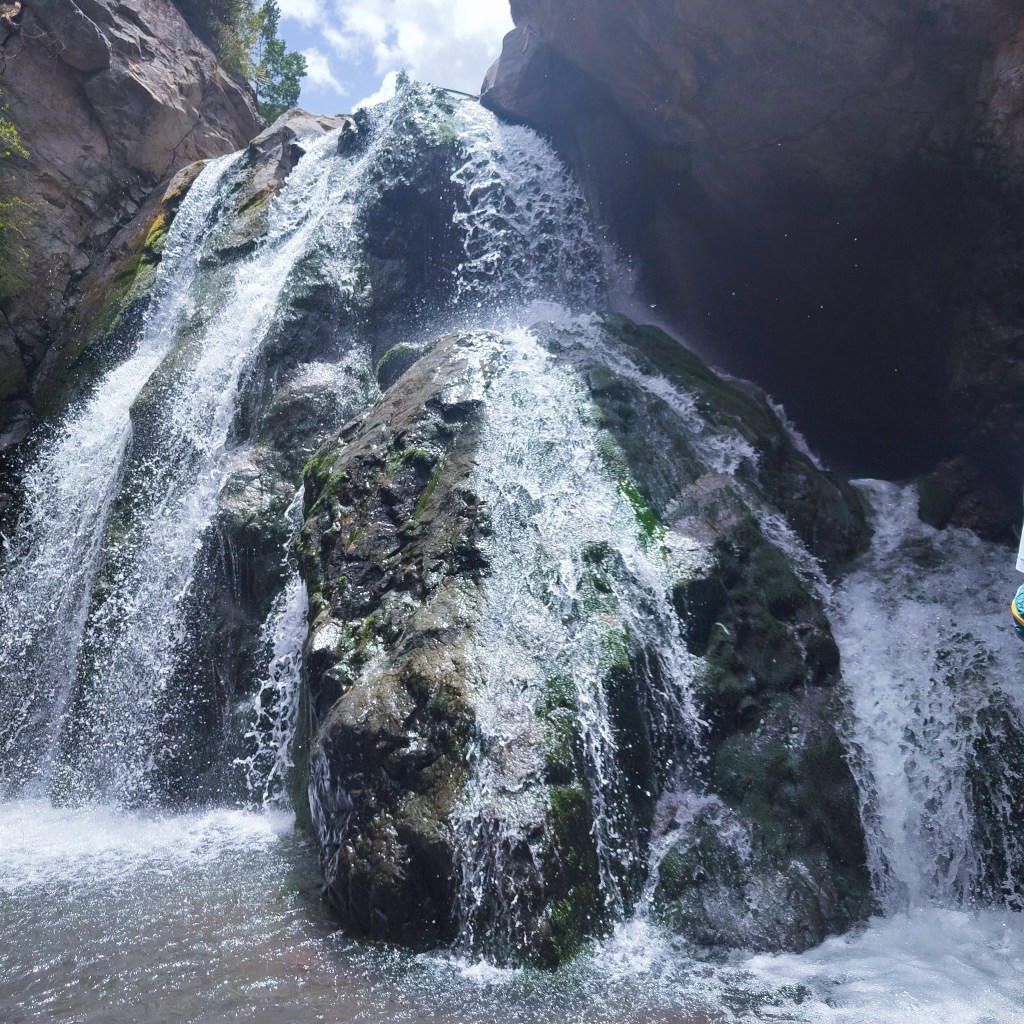
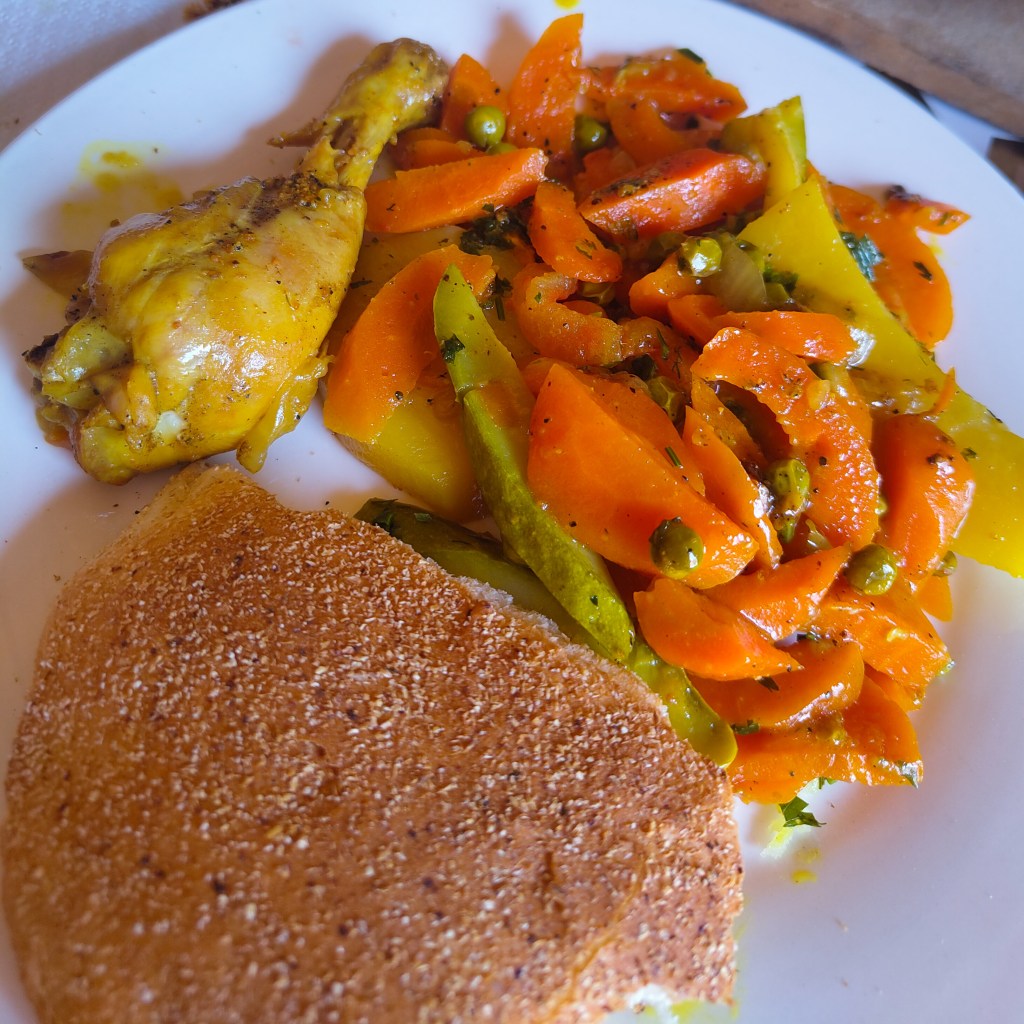
The walk down was arguably worse, as the loose rocks throughout required a lot of focus. Finally, we reached our lunch spot, which I think was some blokes house, to enjoy a homemade tagine with honeydew melon for dessert. This was an optional £5 extra but I don’t think you had much choice but to accept the accommodation of the locals.
On the balcony adjacent to the dining room, we were pointed to Toubkal mountain, which is the highest peak in northern Africa. It’s a bummer I didn’t take a photo.
Not arriving back at the hotel until gone 5pm and having a dip in the riad’s pool for the sake of it, we only ventured for 5 minutes to find somewhere for tea that evening. If you’re interested I had a mix of three kebab skewers, shawarma, chips and crepes for dessert for under £15 including drinks, yet didn’t make the cut for a photo.
Day Four
Today was our free day to explore, so we made the most of our last lie-in and enjoyed breakfast on the rooftop of our riad.
Knowing that the heat was again going to be troublesome, we powered through to visit a few things that top the lists of things to do on various online platforms. I don’t want to be a killjoy but we didn’t find any of the three sights we’d visit particularly interesting, but persevere with me please.
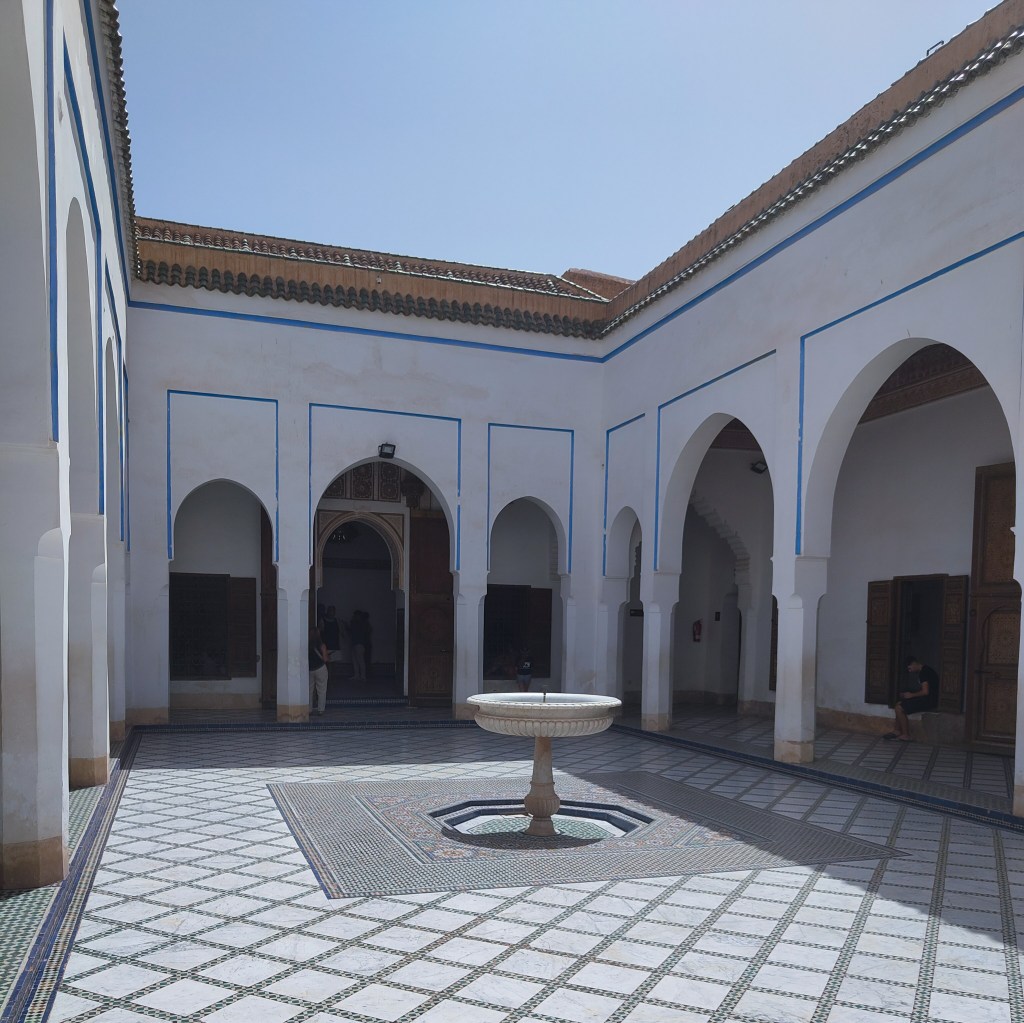
We favoured Bahia Palace first up, due to it being very close to our riad. It was £8 entrance and another £4 for an audio guide. The audio was helpful but not a must as there were notice boards dotted around.
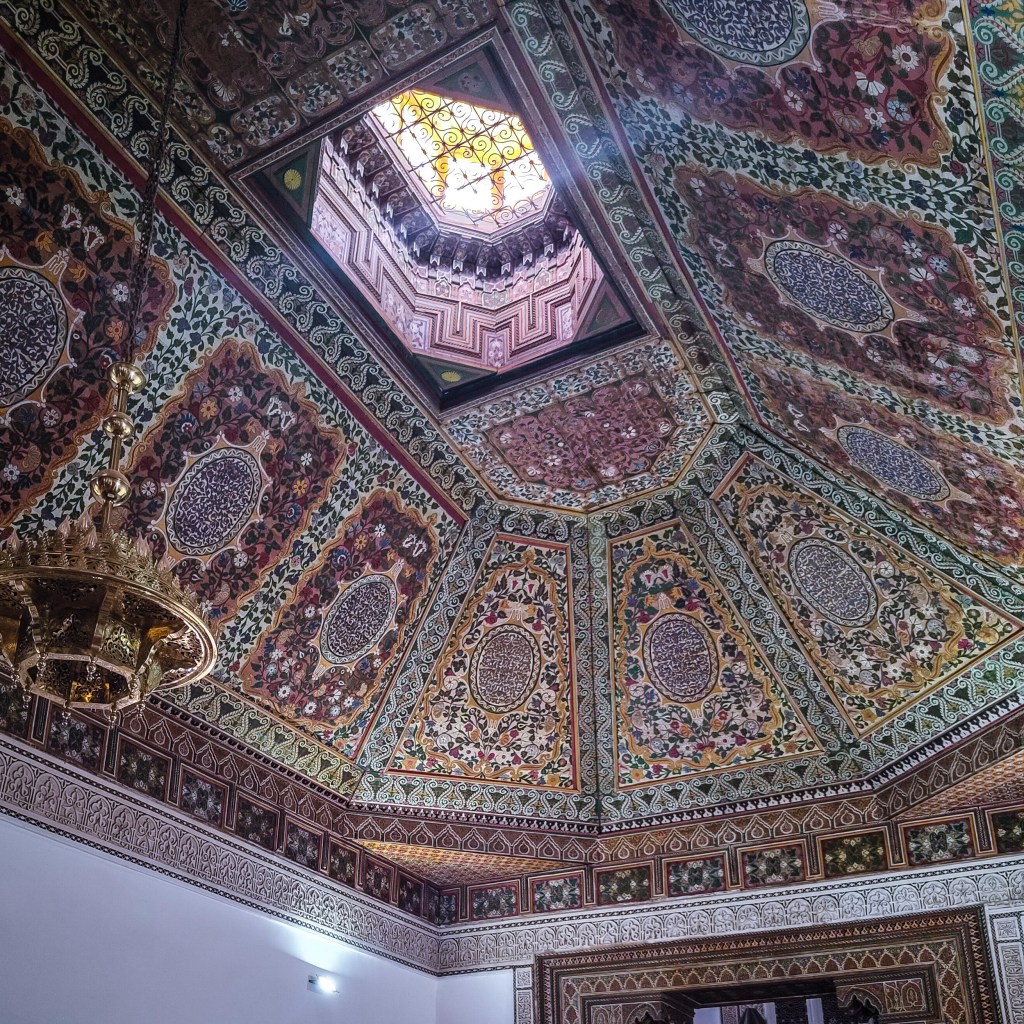
Bahia Palace was built in the 1960’s and extended in 1900. It is made up of some 150 rooms around a few riad gardens and courtyards. A bloke called Ahmad bin Musa, also known as Ba Ahmed ordered the construction of the palace. Ba Ahmed means “the brilliant”, which he also called the favourite of his concurrent wives. I think he had 3 on the go.
For me, the highlight was the intricate artwork on the wooden ceilings and ceramic floor tiles. However, aside from this they were just empty rooms. In 1900 after Ba Ahmed’s death, it became royal property but mere hours after his death, the new Sultan ordered the palace to be stripped of valuables.
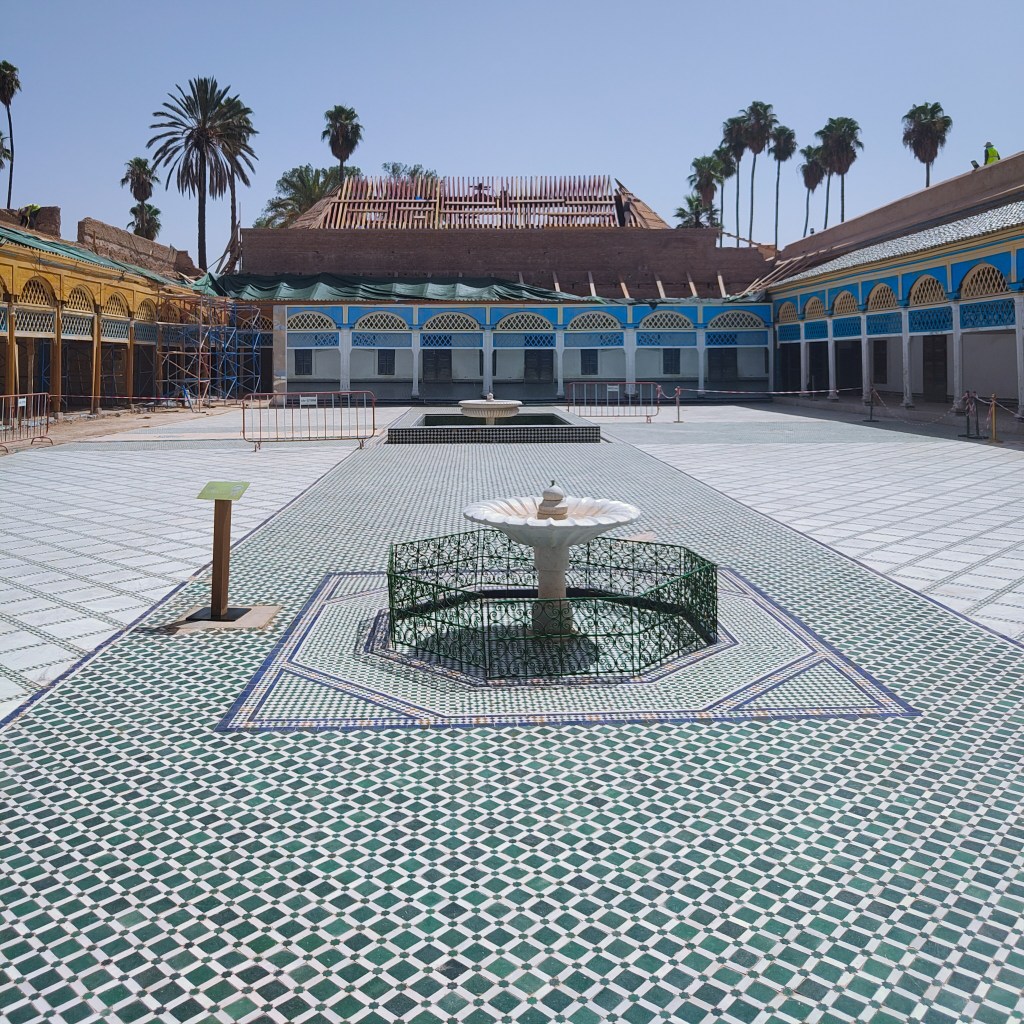
I think our visit to Bahia Palace last no longer than 45 minutes.
Undeterred, we chose Madrasa Ben Youssef as our next destination, a 30 minute walk north through the most dense of the souk. Out of interest, the Marrakech locals have certainly heard of Wales before and most of my shirts featured the Cymru badge. On day four, and hearing “hey, Wales… Gareth Bale!” for, no joke, the 100th+ time at some point along this walk was when it started to get a bit tedious!
On approach we were pleased that it was a little quieter and entry only £4, whilst not entertaining another audio guide.
Madrasa Ben Youssef is an Islamic college commissioned in the 1500’s and is widely recognised as the pinnacle of Moroccan architecture. It closed down in the 1960’s and reopened to the public firstly in the 80’s then again in 2022 after further restorations.
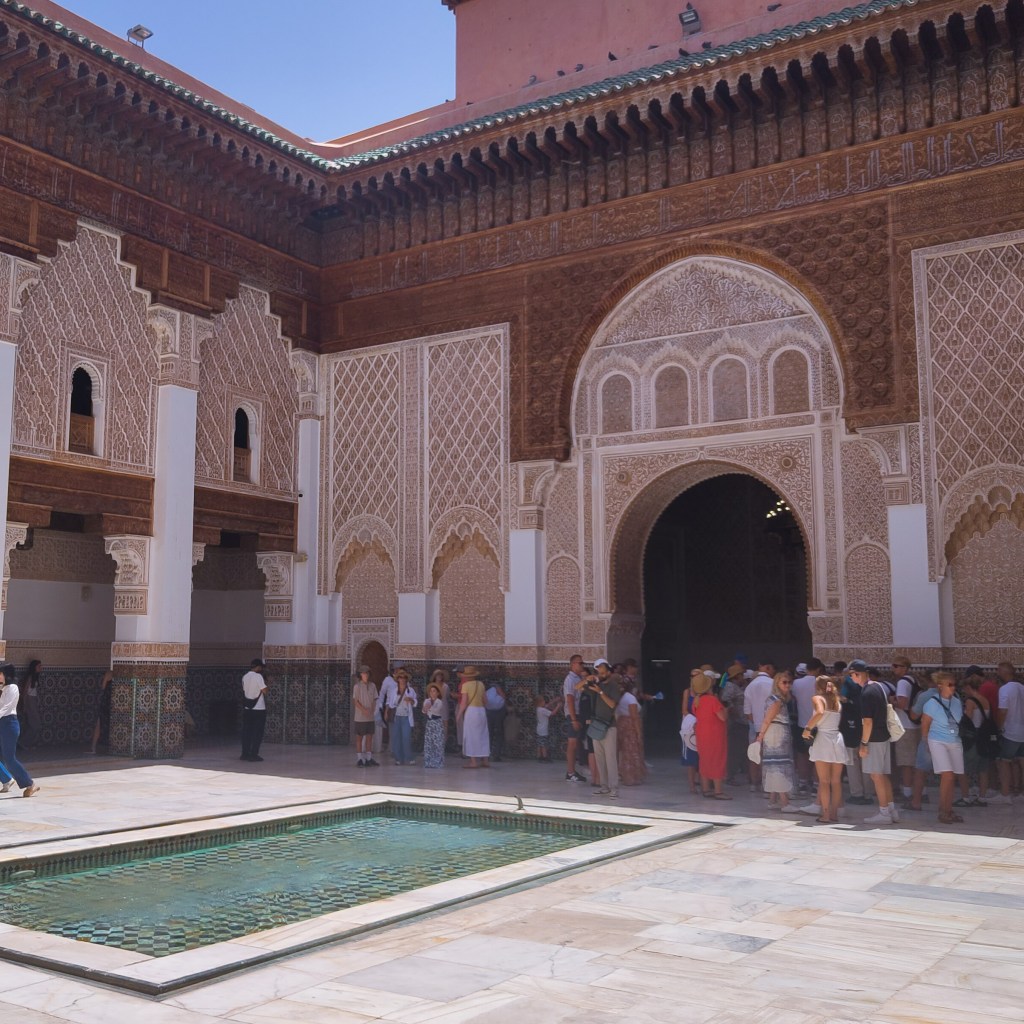
I do feel bad not bigging places up. The courtyard and reflection pool was pleasant but apart from this you were guided through empty rooms, many of which used to be the dormitories. Aside from the cleverly crafted ceramics I’m desperately trying and failing to find something interesting.
After the mornings events, with literally not much to write home about, we had a kebab lunch and a snooze back at the hotel whilst we missed the hottest part of the day.
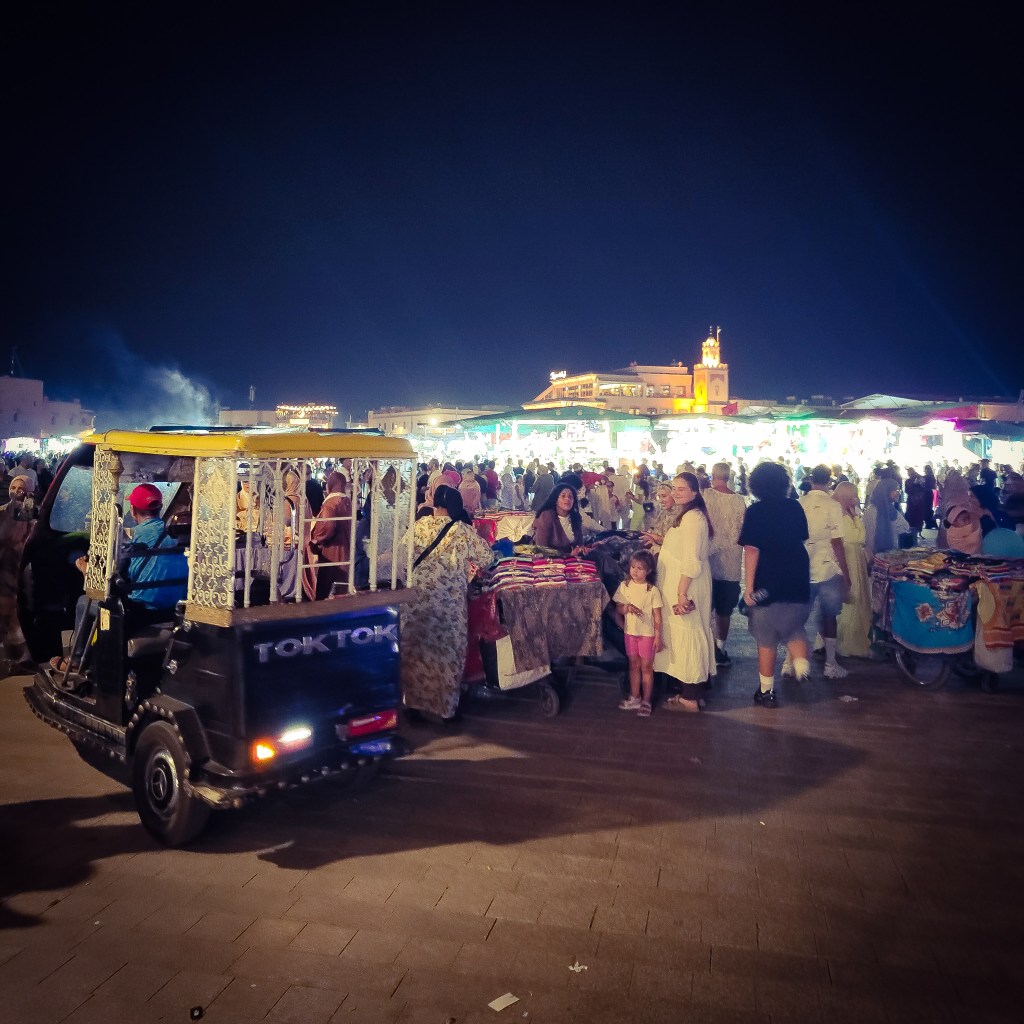
Being the final evening of our stay, we did want to tick off a visit to the main square, Jemaa el-Fnaa of course, at its busiest, which I did fear would be tedious. Luckily, as it happened as we arrived at sunset, the sheer mass of people meant we were hassled a lot less by just moving in the direction of the crowd.
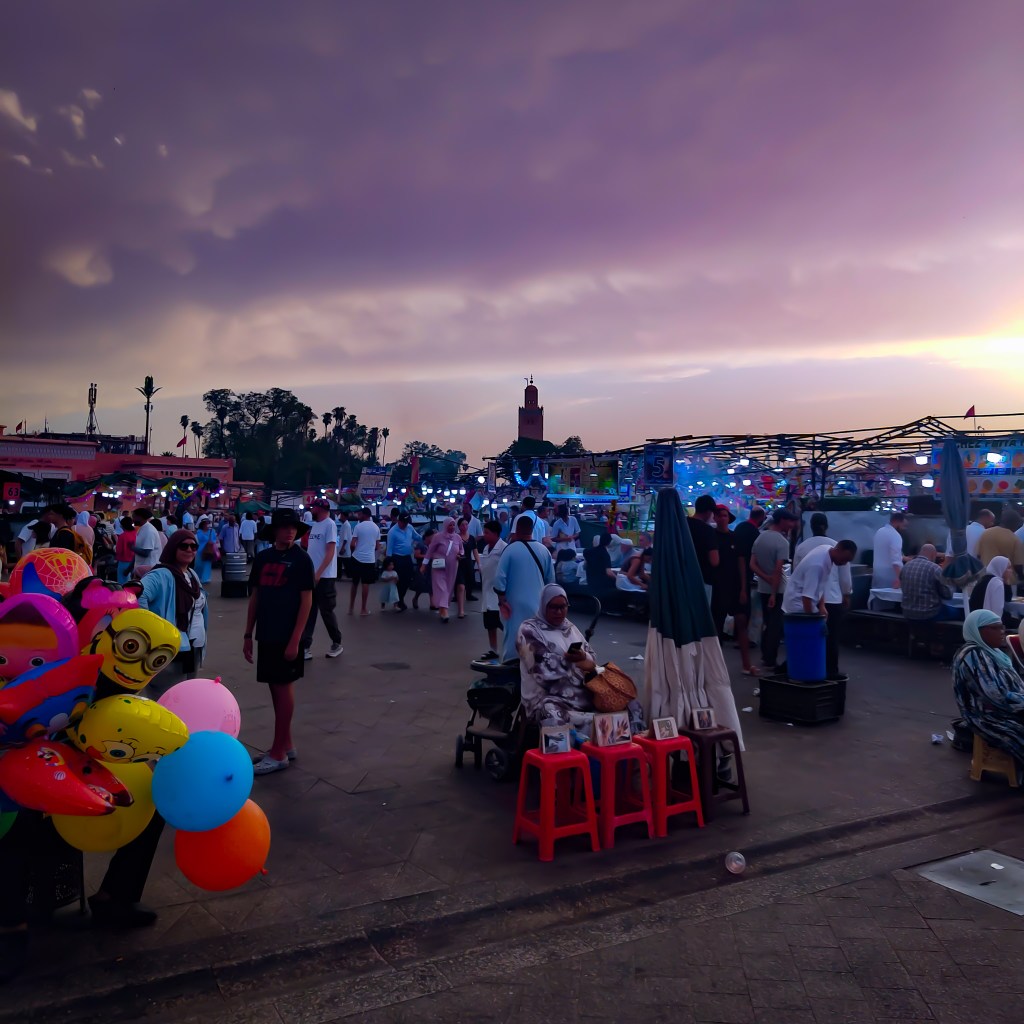
Since earlier in the day countless tents were erected (they are every day and taken down every night!) and in addition to the odd snake charmer and bloke pimping on his poor monkey, there were loads more stalls and food outlets, which I did take an interest in before a representative claimed they had two Michelin stars.
Avoiding that, we enjoyed dinner in the same place we have lunch earlier within view of the Koutoubia.
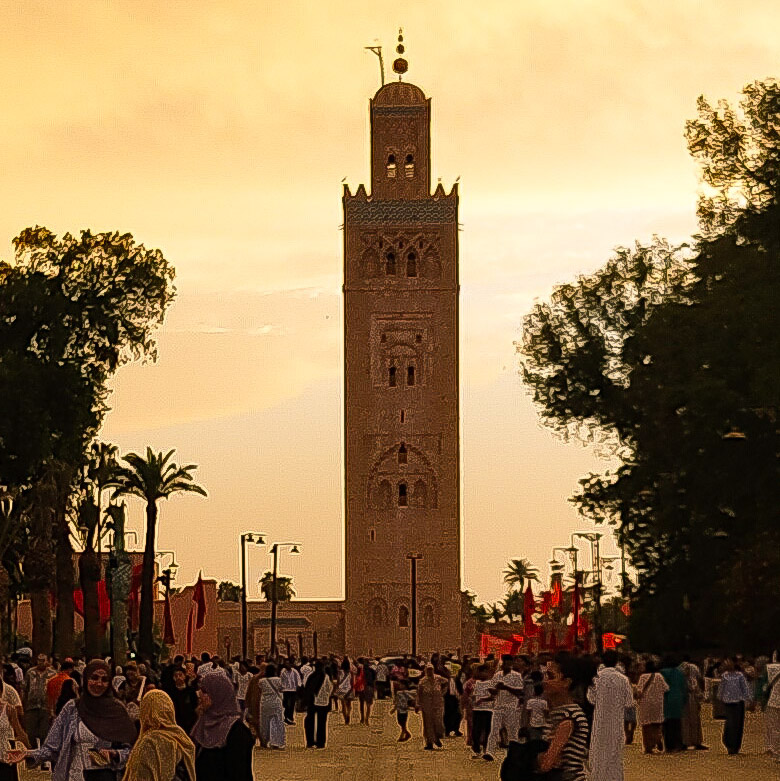
One final walk through the busy square, which now had musicians and people boxing(!) as forms of entertainment, we headed back to the hotel.
Day Five
Before we kick-off our final day, which started with a 4:50am minibus pick-up, there’s a bit of background to our much anticipated hot air balloon ride.
I booked the package a few months back at £50 per person. Just a few hours before the free cancellation period (day 3 I think), Mikayla was having a nose and noticed a weight limit in the small print. Shit.
I wrongfully didn’t think twice about cancelling it, and THEN looked for another. Every single tour would now cost £100+ each and I eventually found an option on Get Your Guide (link) that failed to mention any weight limit. THEN I went outside for a ciggy and having had a short chat with the receptionist, was told I shouldn’t have worried about the weight limit as it won’t be an issue on the day. A very quick squandering of £124.
One positive is that I wasn’t worried about being excluded from my first ever ride in a hot-air balloon. After 45 minutes on the road we registered our and weight and proceeded to enjoy tea and biscuits in the waiting area.
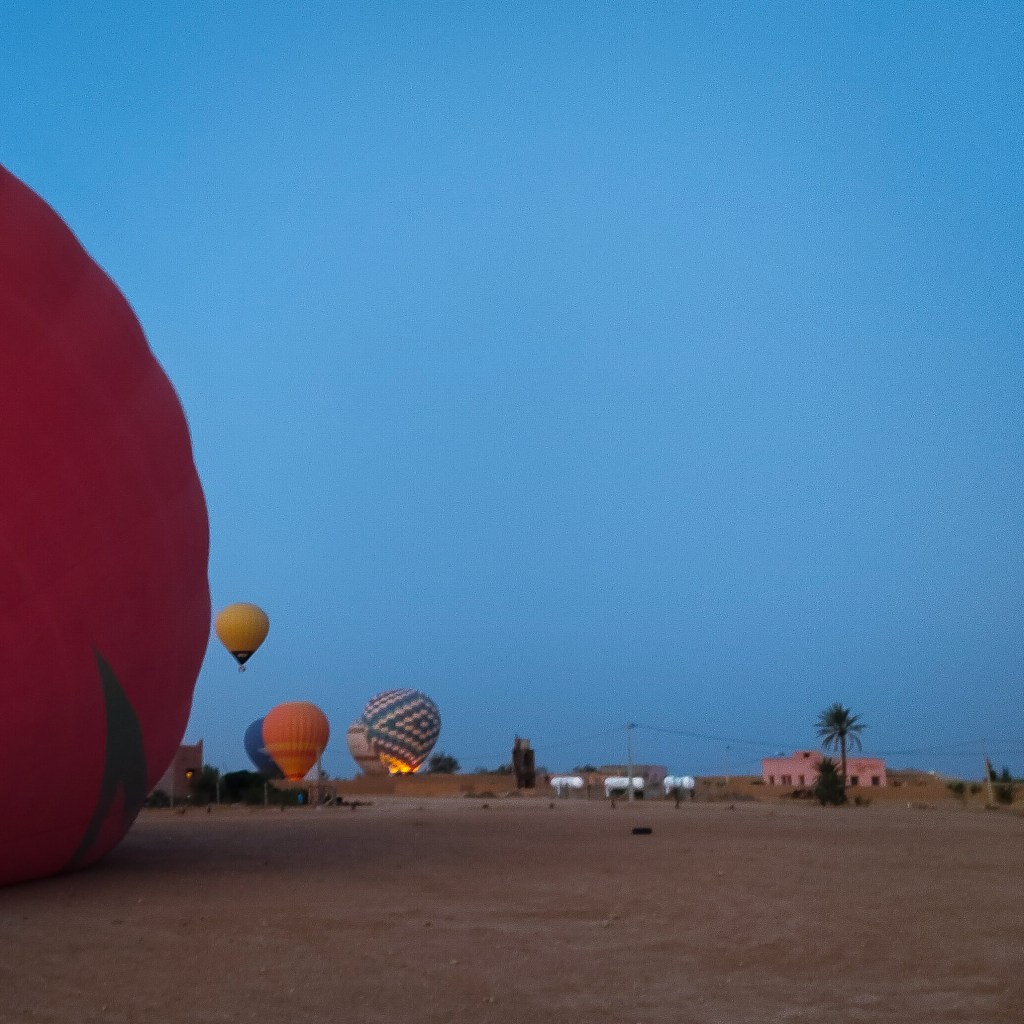
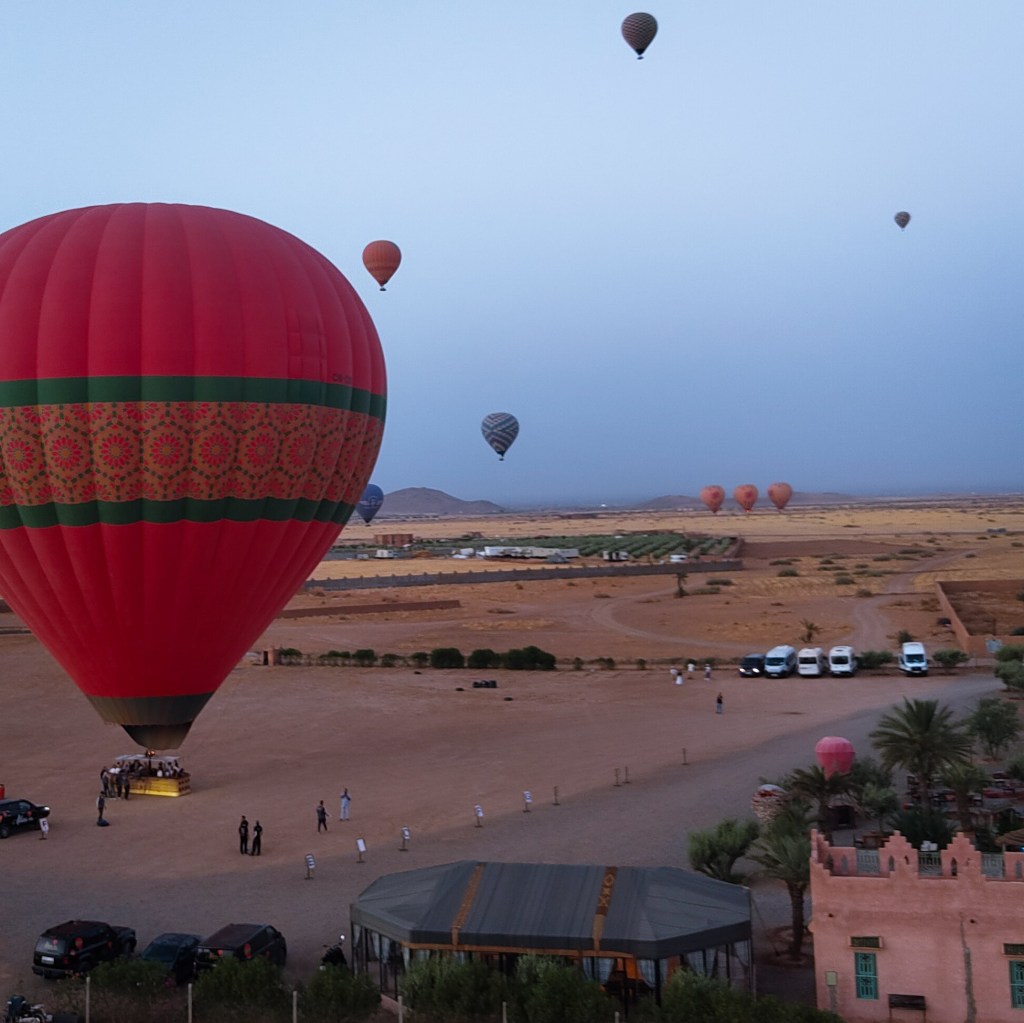
As the sky became lighter we were lined up in front our of dedicated balloon whilst it heated up, a mini spectacle in itself. Once upright we were invited to a basket that could house 20 people with separate room for the ‘driver’.
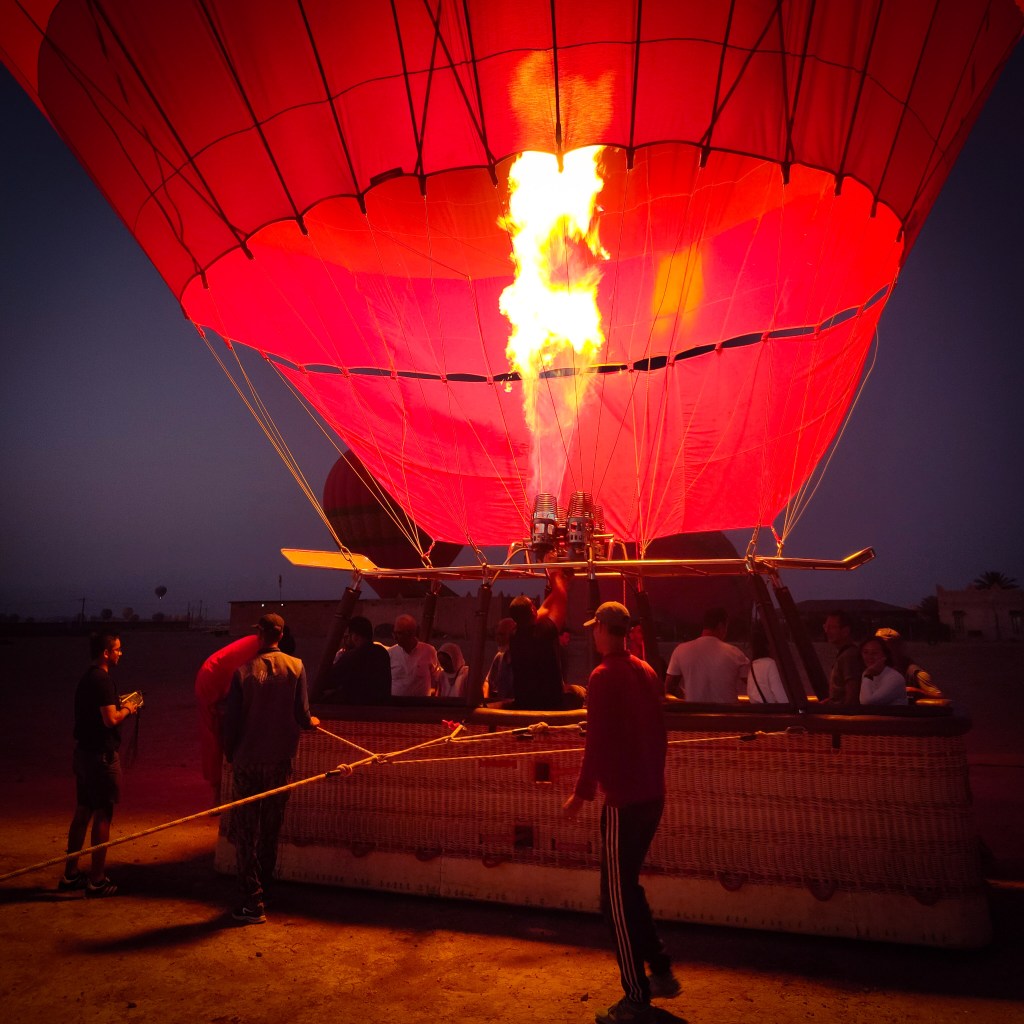
I must say I was very impressed how organised and safe everything was. We were buckled to the side of the basket and after some safety rules and interesting explanation of the science behind everything, gently lifted into the dawn sky with, in the end, another 50 odd well-spaced out.
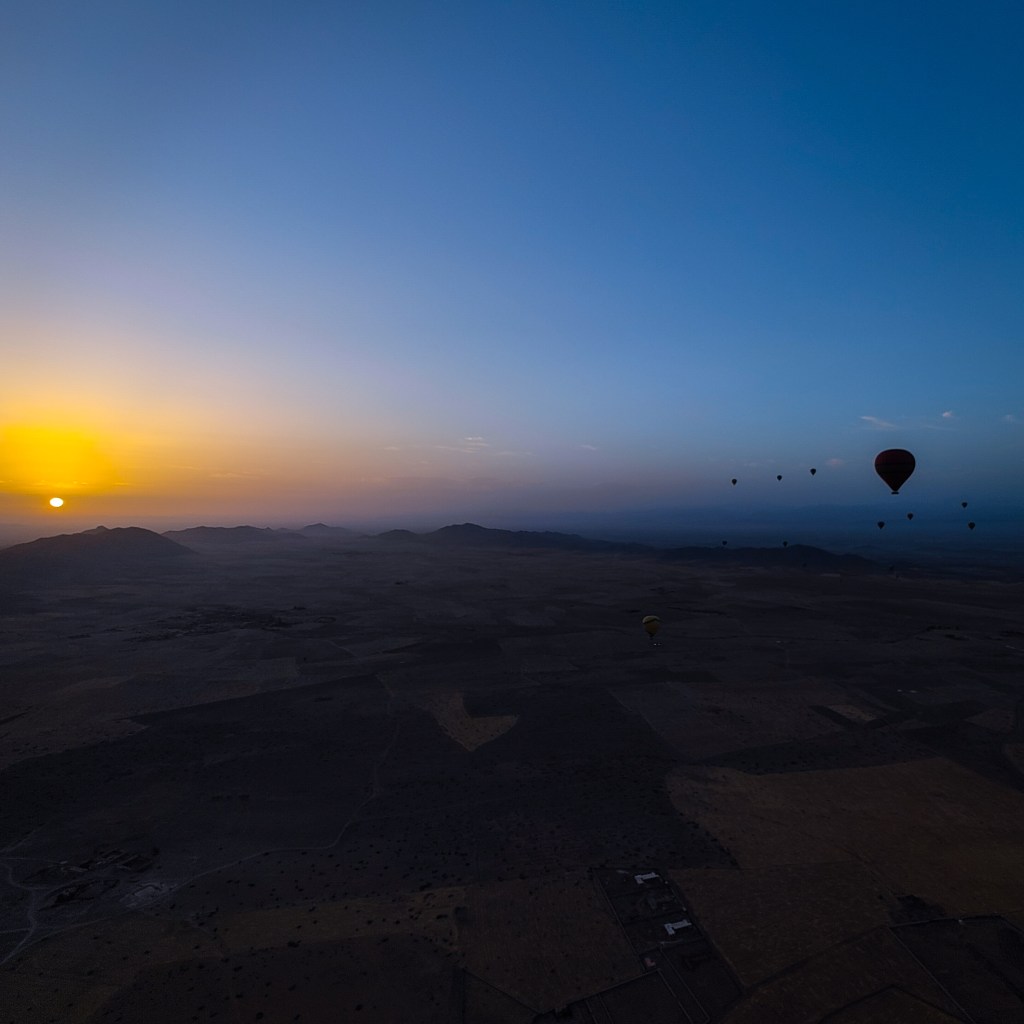
Whilst the darkness of night-time had passed, we had yet to see the sun itself rise above the Atlas Mountains in the distance. Thus it’s appearance was perfectly timed as we were some 500 metres in the air to capture what is likely the defining photo of the trip.
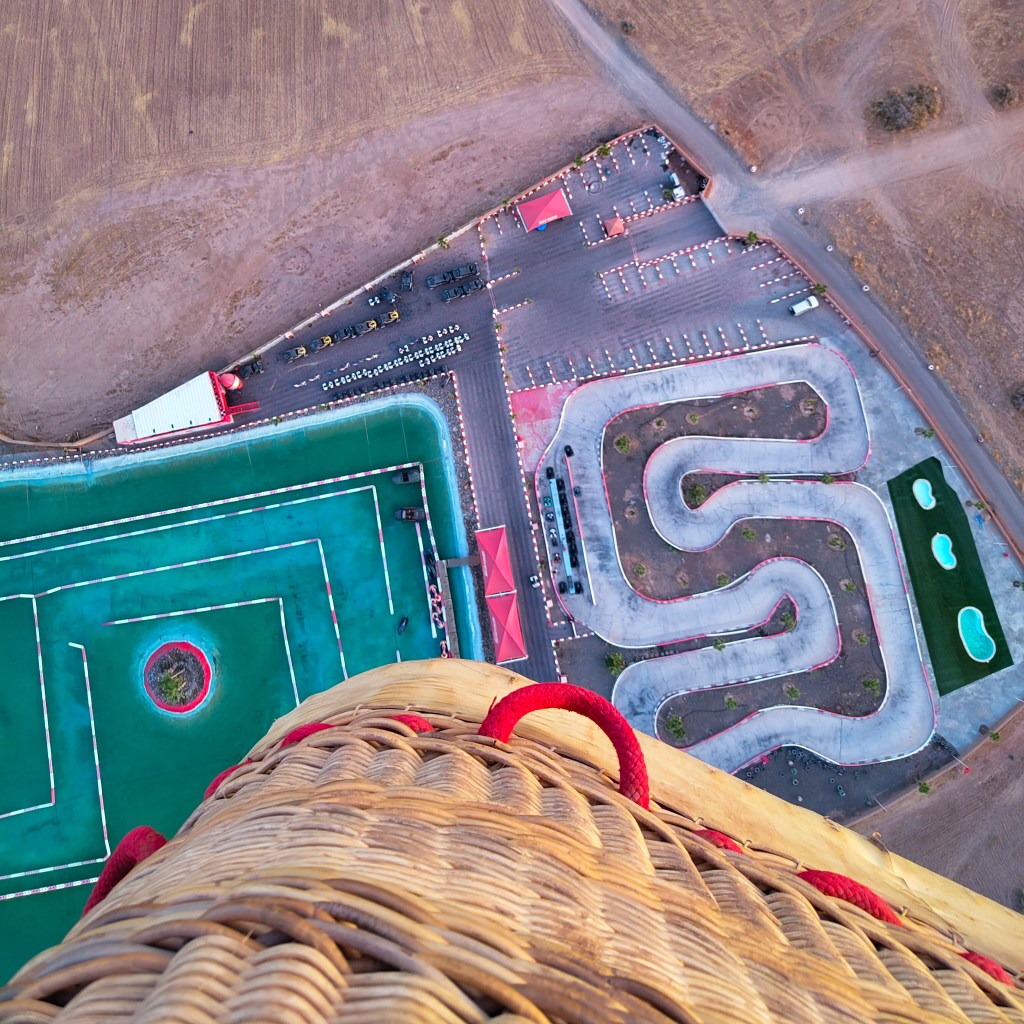
Now it’s not as exhilarating as jumping out of a plane or bungee-jumping but it was bloody enjoyable. It was not scary at all but at one point when we were passing over a go-kart track did I wonder how I was standing on thin air! Love that photo, too. It should have made the top 9 but I can’t be arsed to change it now. A little present for you committed readers!
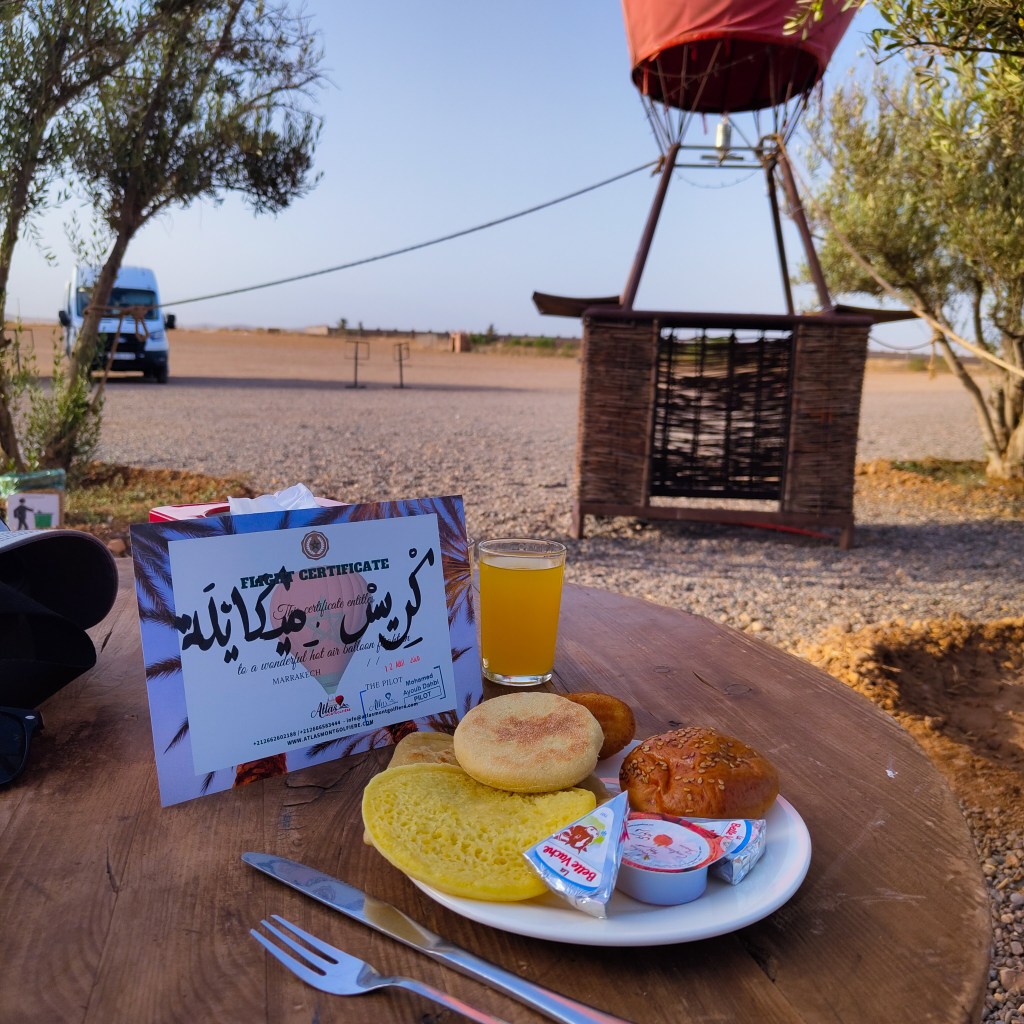
Once back down to earth, literally, we enjoyed another traditional Berber breakfast (i.e. loads of variations of bread and a few other bits) before taking the short minibus back to the hotel.
We were at the hotel by 9am which was a bit difficult to understand at first. With a midday checkout, we made the most of the room with a final snooze before tossing our luggage in reception and popping out for a final few hours.
Fun fact: of ALLLLLL the hassle we had from the market traders, we spent about £1.50 on a fridge magnet for Mum and the all important Christmas decoration. The decoration was the Moroccan star with a red and green tassel. No, it was not baby Jesus but we were in a Muslim country. In August. We did our best.
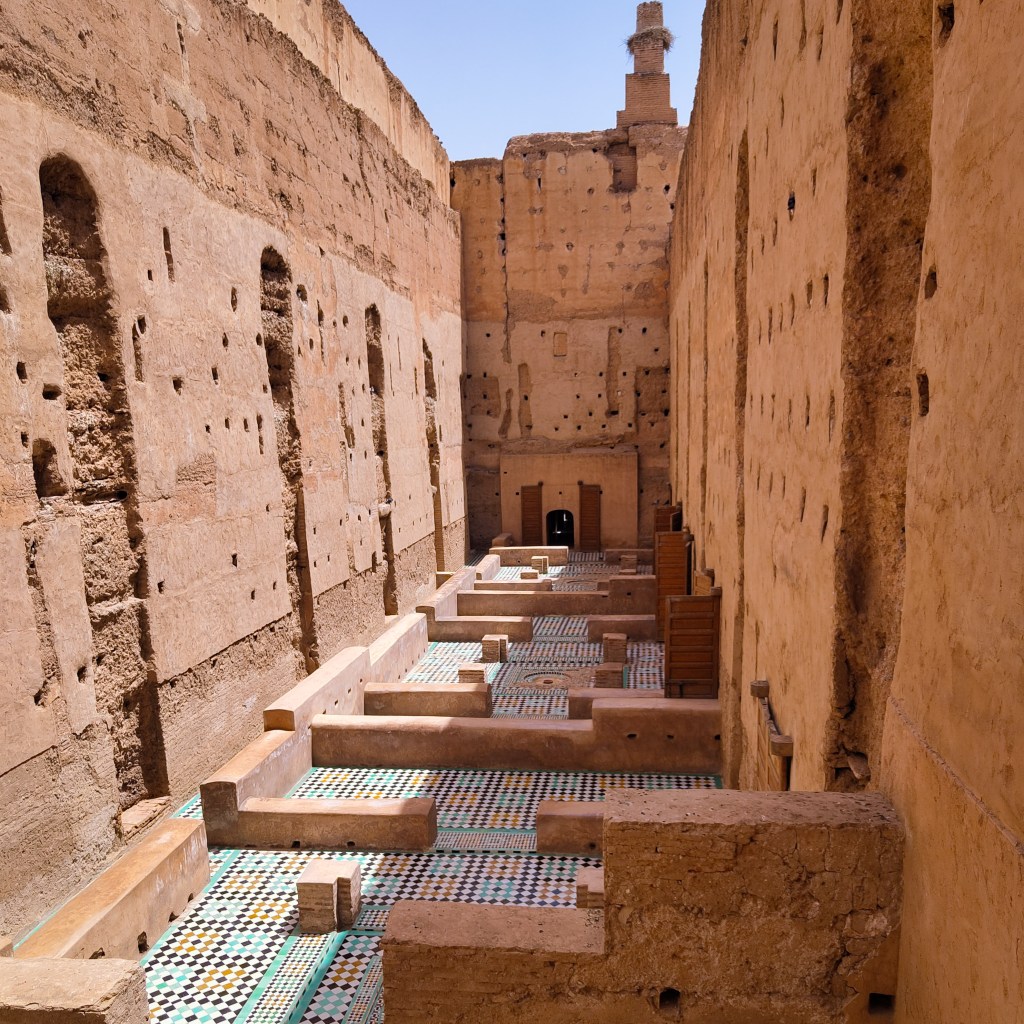
With the contraband secured, we did want to tick another visit off our list, although after Tuesday’s entries we were a bit apprehensive of finding anything overwhelming.
A few hundred yards was another palace, El Badi Palace, which cost £8 each. It was commissioned in 1578 by the Sultan Al-Mansur at the time was decorated with numerous imported materials and was used to showcase the Sultan’s wealth and power. Nothing too strange there then.
After the Sultan died in 1603 it was left to ruin. Whilst it serves as a tourist attraction most of it’s valuable materials were stripped and used elsewhere throughout Morocco.
The tour started off by going underground in a bunker-style tunnel. Here was an exhibition that strangely focused on the Koutoubia than the palace. An important part of the Koutoubia mosque called the ‘Minbar’ is located here, but it just seems out of place.
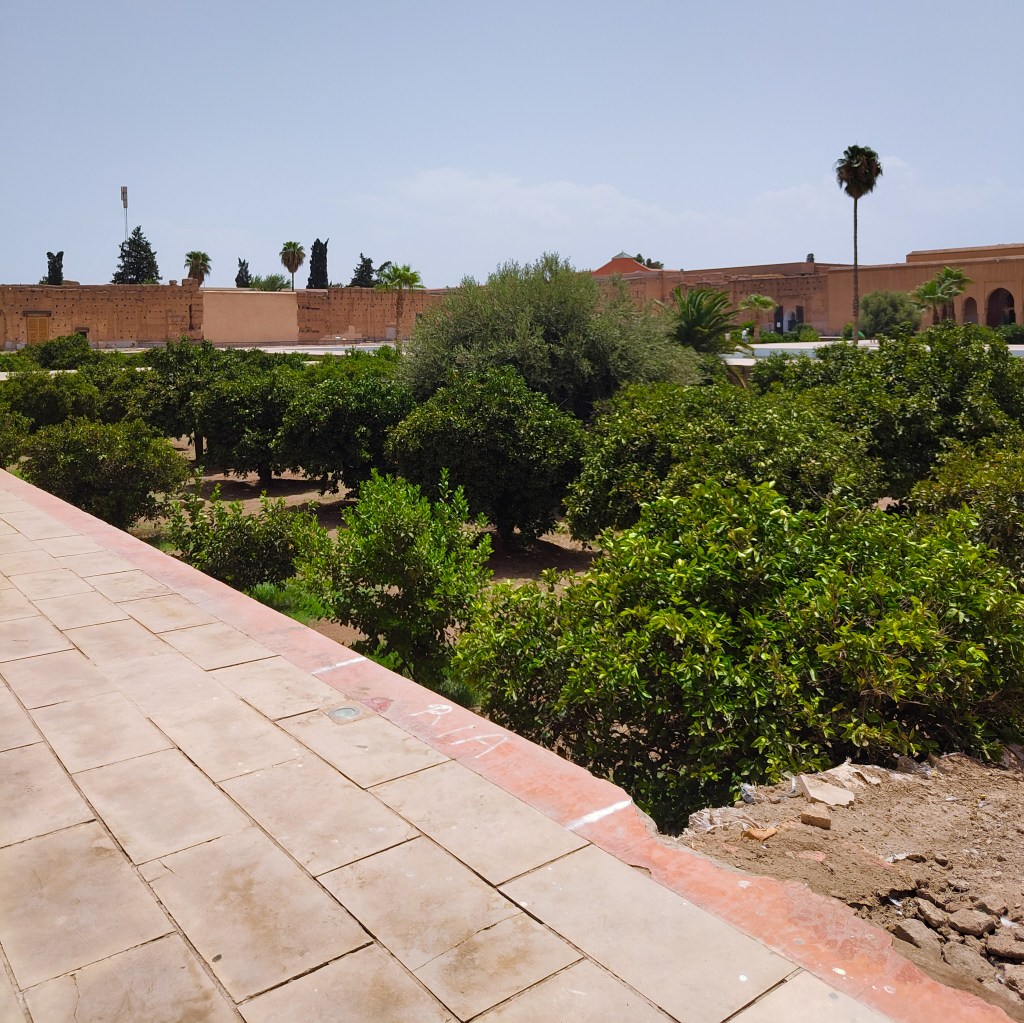
Emerging to the main courtyard, you could see various vegetation sunken into the ground and a large reflection pool in the middle. The whole place was still in need of a lot of restoration although I understand the Palace was significantly damaged during a substantial earthquake in 2023.
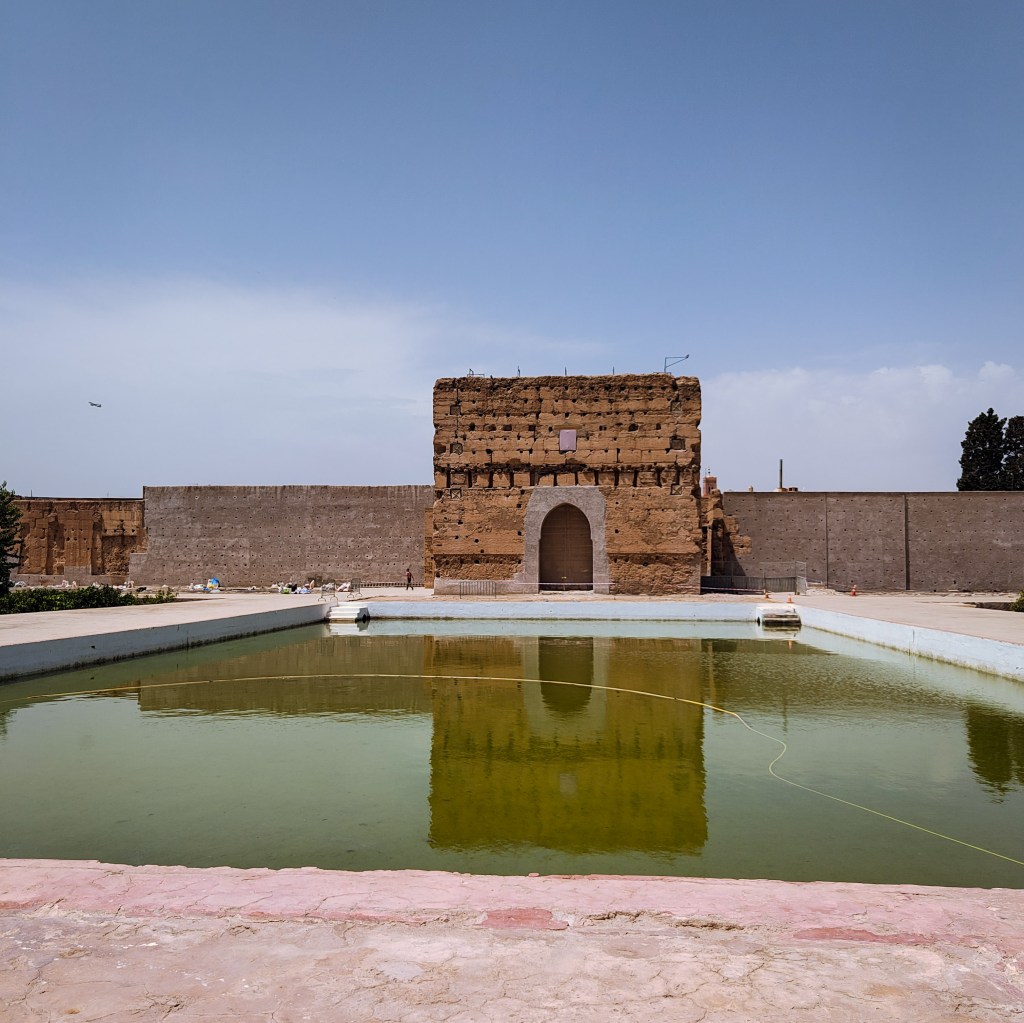
Again, with the lack of easy to follow and easily identifiable information notices it was difficult for me to find the place of any particular interest. Even some photos or diagrams of how the place looked at its peak would have helped.
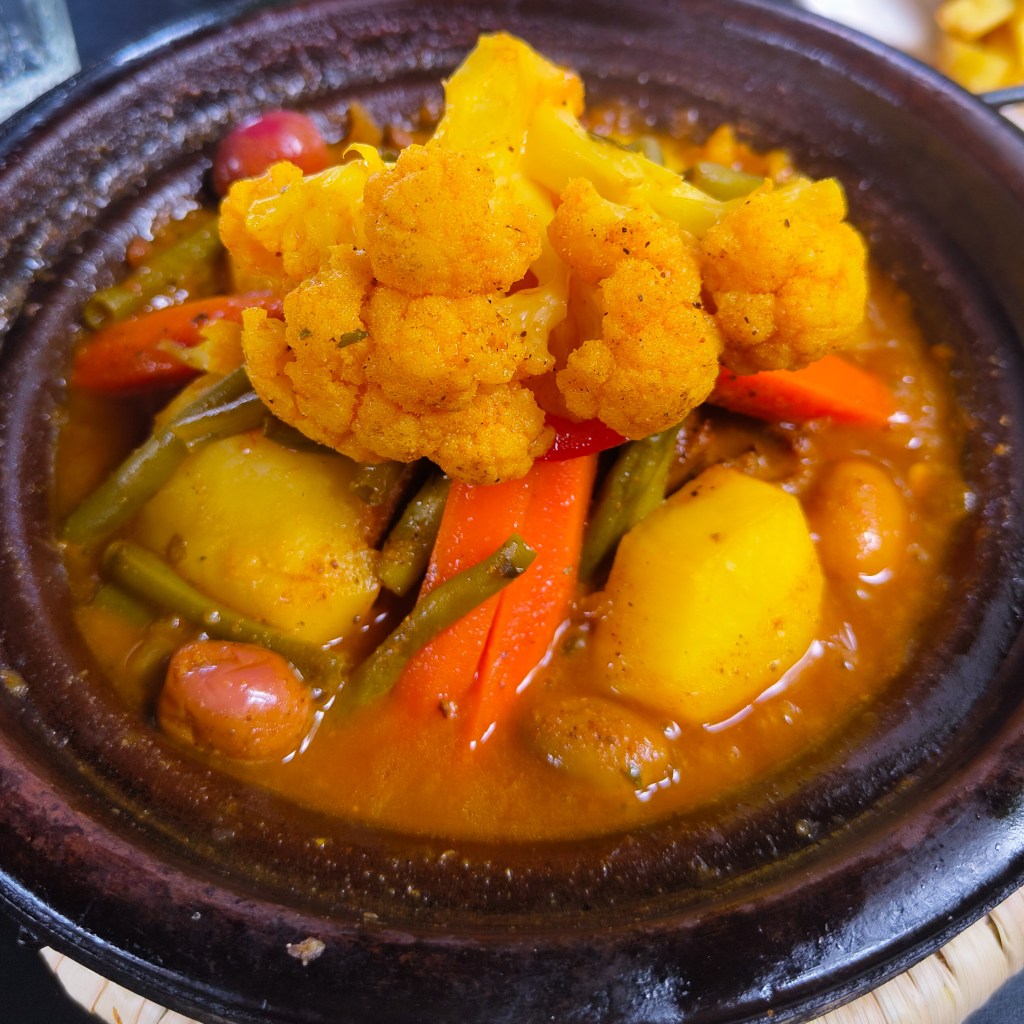
We stopped at a now tried and trusted restaurant near our riad afterwards, and enjoyed my third Tagine of the trip. This was by far my favourite as somehow resonated a beef dinner back home. The beef itself just fell off the bone. I likened it to the steak in a Greggs steak bake but perhaps that is doing this meal a disservice!
Ideally, with our flight not until 9:45pm, we would have stayed for a few hours in Marrakesh, but with little else to do (and have I mentioned the heat?) we collected our bags and made our way to the airport around 3pm. Six hours in any airport is not advisable and Marrakech Menara Airport is certainly no different. With there being no time difference to the UK, we arrived back in Bristol at 1am but with roadworks blocking the main route home, a 3am bedtime meant the final day was very arduous.
Thank you for reading. I hope you’ll see elsewhere that I very rarely blog with such criticism, I’m very easily impressed, but I’m trying to be as honest as I can. Having had conversations with friends now back home, I have changed my mind from NOT recommending Marrakech, to recommending it with caution. I’m starting to look back on it more fondly than I did on the plane home, although the trip without the hot air balloon ride to finish off would leave little to celebrate. If you have stayed in similar destinations and know what to expect, then go for it. Otherwise I recommend you seriously consider staying in a nice fancy hotel outside the Medina, being free to leave the sensory overload at your pleasure!

